

Make plastic bottle sun catchers by coloring clear water bottles and cutting them into colorful hanging spirals. This recycled art project combines open-ended pattern making with a simple conversation about reducing waste and reusing materials.
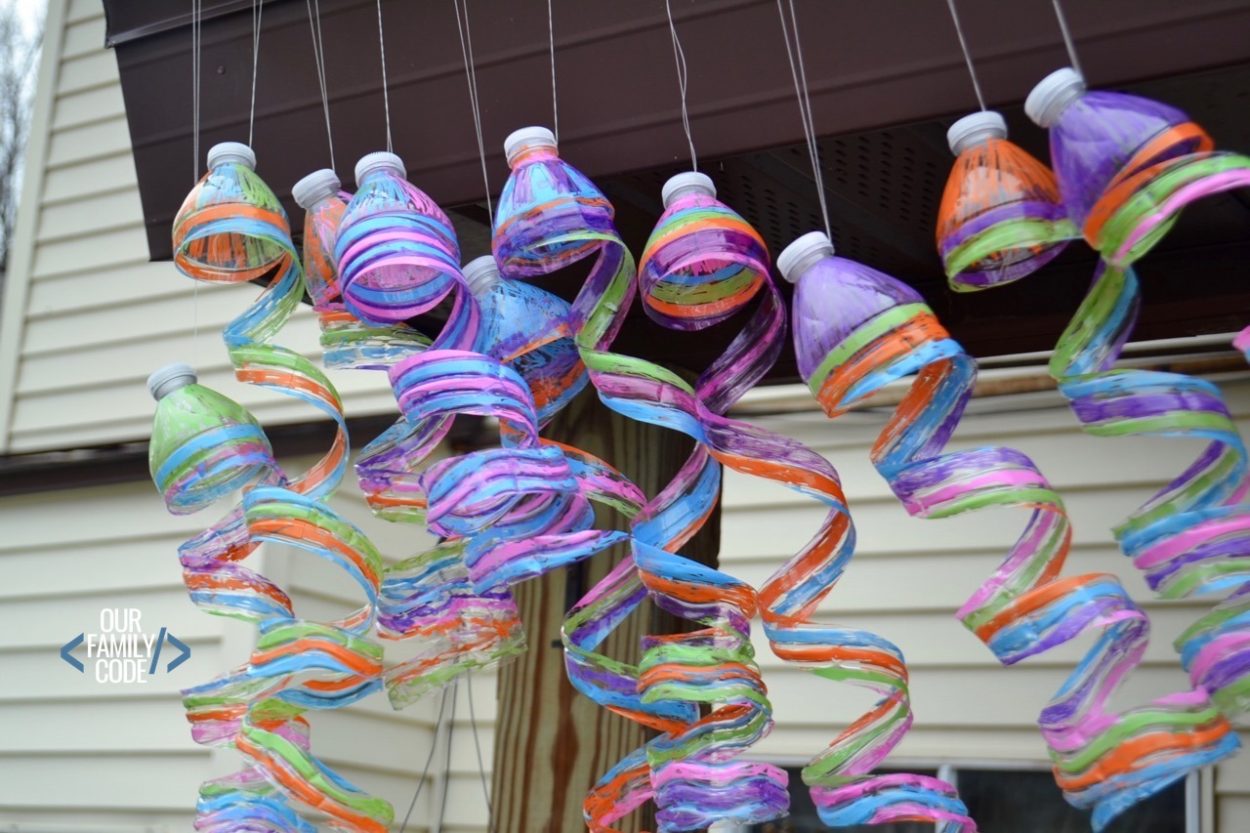
We made our original display with bottles we already had and hung the finished sun catchers from the overhang in our backyard. The kids spent most of their project time coloring, which gave us plenty of room to talk while they worked.

Plastic Bottle Sun Catchers at a Glance
An adult handles the cutting and hanging, while children can help plan and color the bottles with age-appropriate materials. Keep the bottles intact during coloring so children are not working against exposed cut edges.
Our original project used five to ten bottles for a group display, but you can begin with one bottle. The printable project card estimates an hour and a half for the full activity; the actual time depends on the number of bottles, coloring details, and drying time.
The bottle’s curved shape becomes a spiral when an adult cuts around its body. You do not need to heat the plastic, use an oven, or add melted materials to make it curl.
Supplies for Plastic Bottle Sun Catchers
This post contains affiliate links. As an Amazon Associate, Our Family Code earns from qualifying purchases. Please see our Disclosure Policy for more details.
- Clean, empty plastic water bottles with their caps; one for a small project or five to ten for the original group display
- Permanent markers suitable for the users and plastic surface
- String or fishing line for an adult to attach
- Clothespins for hanging, if appropriate for your display
- Scissors for an adult and a covered work surface
Use bottles that originally held drinking water, wash them, and let them dry completely. Choose clear plastic that is easy for an adult to cut; skip brittle bottles, damaged containers, or bottles with residue.
Read the marker labels for age recommendations, ventilation, surface compatibility, and drying instructions. If permanent markers are unsuitable for a child, that child can plan a design on paper while an adult transfers it to the bottle.

How to Make Plastic Bottle Sun Catchers
1. Remove the Labels and Prepare the Surface
Peel the label from each bottle so the clear plastic is available for drawing. Wash away residue as needed and dry the outside before applying markers.
We saved our labels for another project during the original activity. Saving clean materials can be useful, but keep only what you have a practical plan to use and store safely.
Leave the bottle intact for now, including the base. The cap can stay on during coloring if it makes the bottle easier to hold.
2. Color Patterns on the Bottle
Draw stripes, dots, blocks of color, or another pattern around the bottle’s body. There is no need to color the base because an adult will remove it later.
Our kids enjoyed making their own patterns, and coloring took most of the time in this project. Let children work at their own pace rather than treating the bottle as a design they have to copy exactly.

Turn the bottle as you draw so the pattern continues around the curved surface. Try leaving some clear sections between colors if you want to compare the uncolored and colored plastic later.
Let the ink dry for the time stated on the product label before touching those areas or moving to the cutting step. Test a marker on one small section first if you are unsure how it will behave on the bottle.

3. Have an Adult Remove the Base
An adult should cut the bottom from the bottle and collect the loose piece immediately. Keep children away from the scissors and newly cut edges during this step.
In our original project, we saved the bases with the bottle labels for a future plastic-gemstone activity. That was a plan for another project, rather than an extra step you need to complete for these sun catchers.

Inspect the cut edge before continuing and discard pieces that crack or leave edges you cannot safely manage. Avoid letting children hold the open bottle while an adult is cutting it.
4. Cut a Continuous Spiral
Starting at the open bottom, an adult cuts diagonally around the bottle’s body in a continuous spiral. Keep turning the bottle as you cut so the strip travels around it toward the shoulder.
Stop before the bottle begins to narrow at the rounded top. Leave that top section and neck intact so the cap can help hold the hanging string.

Aim for a strip width that is easy to follow rather than extremely thin pieces. A narrow strip can be harder to cut neatly and more likely to tear during handling.
Allow the cut section to hang naturally instead of pulling hard on it. Check the finished strip for sharp points, loose scraps, and tears before putting it on display.
5. Attach the String and Check the Connection
An adult ties a knot in the string or fishing line and positions it so the cap closes over the knot. Screw the cap on firmly, leaving the rest of the string available for hanging.
Give the connection a gentle check before lifting the bottle into place. If the cap does not hold the line securely, choose a different bottle-and-cap combination or another adult-managed display method.
Keep string, fishing line, caps, and loose plastic away from babies and young children. The finished piece is a decoration, and its hanging line should remain out of reach.
6. Hang and Enjoy the Colors
We used clothespins to hang our original sun catchers from the backyard overhang. You can hang bottles individually or gather their strings for a grouped display, provided the support is secure.

For an outdoor display, keep every piece attached and bring the decoration in during strong wind or bad weather. Remove it promptly if the plastic starts cracking or shedding pieces.
An indoor display near a bright window is another option when you want to observe the colors without leaving plastic outdoors. Keep it away from heat sources and places where the line could become tangled with people or pets.
What Can Kids Observe?
Light, Color, and Clear Plastic
Look at an uncolored section and a colored section in the same light. Ask children to describe what they can see through the plastic and how the view changes behind a colored patch.
These sun catchers show color and light passing through parts of the decorated plastic; they are not guaranteed to cast bright colored shapes on the ground. The effect depends on the ink, thickness, lighting, and display position.
Compare the same sun catcher against a white background and a dark background. Ask which details are easier to see, then move only the background so the comparison stays focused.
Patterns on a Curved Surface
Before cutting, look for repeating stripes, dots, or other shapes around the bottle. After cutting, follow the same pattern along the hanging spiral and notice how its arrangement looks different.
Children can sketch a repeating sequence on paper before transferring it to the bottle. A simple red-blue-red-blue pattern gives them a clear prediction to check when the strip hangs down.
A Small Design Comparison
If you have two similar bottles, plan one difference before beginning, such as wide color bands on one and narrow bands on the other. Use the same marker set and display location so the pattern is the main feature being compared.
Ask children which design they prefer and what they notice rather than declaring one version better. A design question can have several useful answers when children explain their choices.
Reduce, Reuse, and Recycle with Kids
We originally paired this activity with an Earth Day conversation, but these ideas are useful all year. The craft offers a concrete object to discuss instead of an abstract instruction to “help the planet.”
The EPA’s plastic waste guidance emphasizes reducing waste, reusing items, and checking local recycling requirements. Making a craft is one reuse option, while avoiding unnecessary disposable bottles can prevent that waste in the first place.
Reduce: Use Fewer Disposable Items
Talk about where your family could use a refillable water bottle or reusable container. Choose one realistic change children can recognize in their own routine, such as taking a refillable bottle to an activity.
Reuse: Give an Existing Item Another Job
This project reuses a bottle as a decoration without processing it into new raw material. Start with bottles already available rather than buying bottled water just to collect craft supplies.
Ask children to name the bottle’s first job and its new job. Then discuss whether the new object will actually be used and what you will do when it is no longer useful.
Recycle: Follow Your Local Program
A plastic resin symbol does not guarantee that an item belongs in your local recycling collection. Check your provider’s rules for caps, decorated plastic, and cut scraps before deciding where those pieces go.
You can extend the discussion with our Earth Day coding recycling sorting activity. Sorting by an actual rule is a helpful connection between everyday decisions and coding logic.
Tips for a Family or Classroom Project
Prepare a separate adult cutting area and keep finished bottles away from those waiting to be colored. A simple sequence—color, dry, adult cut, adult hang—makes the shared workflow easier to follow.
Write each child’s name on a planning sheet or removable label rather than assuming every bottle will be recognizable after cutting. Let children describe the colors and patterns they chose before you arrange the display.
For a fall variation, try orange, red, and yellow patterns and compare them with leaves you observe outside. If you want more seasonal ideas after this craft, explore our 31 nights of Halloween STEAM activities.
Questions About Plastic Bottle Sun Catchers
Can I Make Just One Sun Catcher?
Yes, one bottle is enough to try the process. Five to ten bottles was the supply range for our original larger display, not a requirement for every family.
Why Is My Spiral Not Hanging Evenly?
Strip width, bottle shape, and the angle of the cut can affect how the plastic hangs. Let an adult inspect it and compare it with the photos rather than trying to force or stretch it into position.
Do I Need a Printable Template?
No template is needed because the marker designs are open-ended. The original printable project card below supplies a quick materials and instruction reference.
Printable Sun Catcher Project Card
Use the original project card for a condensed version of the steps. An adult should complete all cutting, inspect the edges, and attach and hang the string.
Plastic Water Bottle Sun Catchers

Recycle plastic water bottles into a sun catcher with this great spring recycled art project for kids!
Materials
- 5-10 plastic water bottles
- Permanent markers
- Fishing line
- Clothespins (optional)
Tools
- Scissors
Instructions
- Take off the labels on each water bottle.

- Use permanent markers to color patters on the body of the water bottles. There is no need to color the base.

- Have an adult remove the base of each water bottle.

- Cut water bottles at a diagonal all the way to the rounded top. Do not go past the point where the bottle begins to narrow.

- Use thread or fishing line and tie a knot.

- Screw the water bottle caps over the knot so that the thread is tightly secured.

- Use clothespins to hang sun catchers up individually or tie all of the strings together to create a more gathered sun catcher.
Notes
Because Earth Day is right around the corner, we discussed what it meant to Reduce, Reuse, & Recycle in regards to plastics, why it is important and how we can do each of those concepts in our daily lives.
Reduce - We can reduce the number of plastics we consume by using reusable water bottles, storage containers, etc.
Reuse - We can reuse the plastics that we do consume by making them into something else or supporting businesses that reuse plastics and make them into sustainable products.
Recycle - We can make sure we understand how to properly recycle items, what items can be recycled, and teach others about the things we know.
Recommended Products
As an Amazon Associate and member of other affiliate programs, I earn from qualifying purchases.


We loved the colorful result of our original project and the chance to give existing bottles another purpose. If you make your own, share which patterns worked well and what your kids noticed as the bottles became spirals.

Save this project for your next recycled art day, whether you are planning an Earth Day activity or simply using materials you already have.

You Might Also Like
Finding Pi with Math Sun Catchers
Combine fuse-bead art with circle measurements and explore the relationship between circumference and diameter. It is another way to connect a colorful display with a hands-on learning question.

Recycled Crayon Sun Catchers
Give leftover crayons a new purpose in a different sun catcher activity. Compare that material and process with the clear plastic bottles used here.
Plastic Bottle Butterflies
Use our free butterfly template to turn a bottle into monarch-inspired art. This companion activity adds wing patterns and migration learning to the reuse conversation.
More Recycled Crafts and Activities
Find more ways to use existing materials for creative projects with kids. Choose an activity that fits the supplies you have and the ages of the children taking part.
Meet Toni, the Maker Mom behind Our Family Code

Hey there, I’m Toni! I’m a software engineer and Maker Mom that finds my joy in unleashing my children’s curiosity by exploring STEAM concepts with my fantastic five!
When I’m not chasing toddlers or raising tweens, you can find me tearing things up and putting them back together over here at Our Family Code.
I am the owner and content creator of multiple educational websites designed to increase access to STEAM & STEM education with a focus on teaching computer science and coding to kids of all ages!









Oh my gosh this is seriously the coolest! I will definitely be making these with my kiddos. Such a creative way to reduce waste!
What a fun project! I love how you can teach kids to reduce, reuse, and recycle with it.
these are so cute! what an awesome craft!
I LOVE THIS!!!!! I am going to definitely try get my kids to do this!!!
Thats awesome!!! Gonna try it
Sayeda
Which markers did you use? I find sharpie to be too pale on clear plastic.