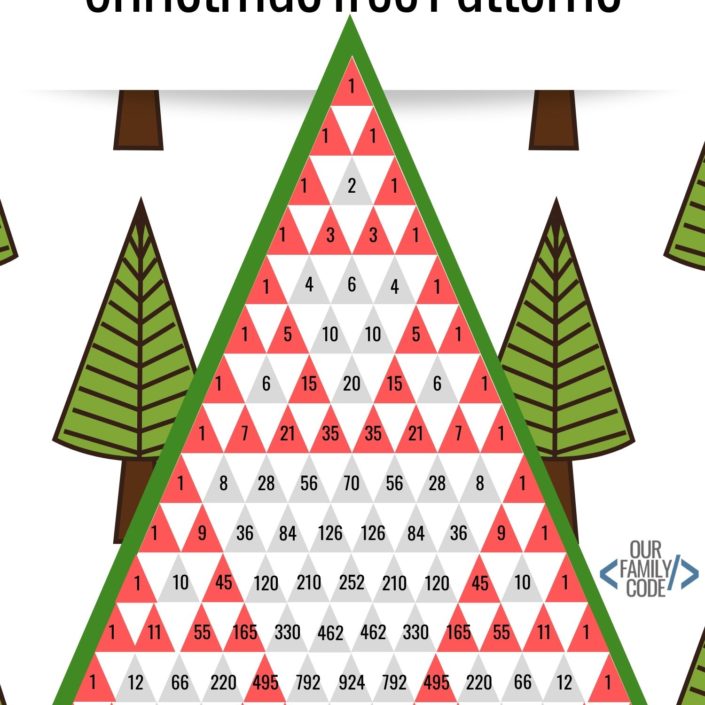
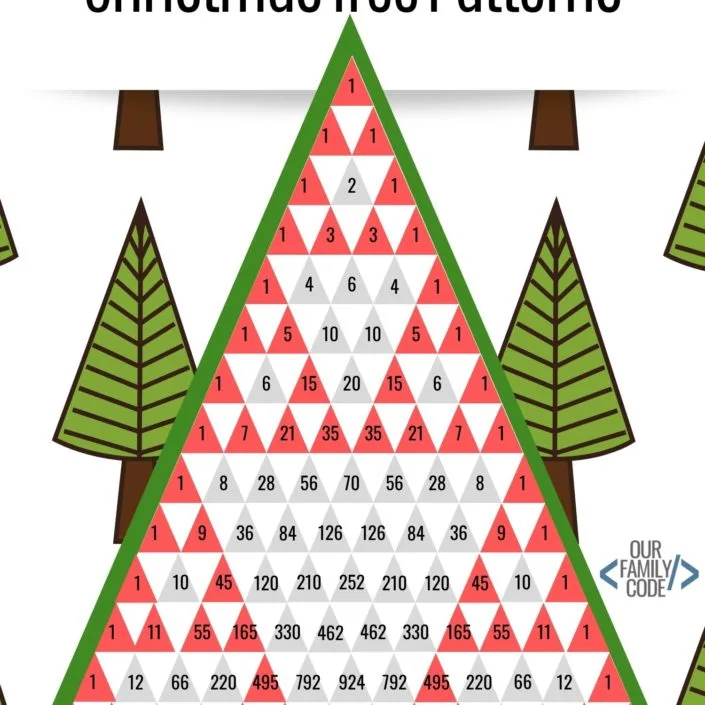
Complete Pascal’s triangle and reveal some awesome math patterns with these free Christmas tree Pascal’s Triangle worksheets!
Don’t tell Fibonacci, but I might enjoy working with Pascal’s triangle more! What’s better than patterns during the Christmas season?!
Learn about Pascal’s Triangle with this fun Christmas math activity! Pascal’s Triangle is a pretty cool mathematical concept that is filled with tons of patterns!
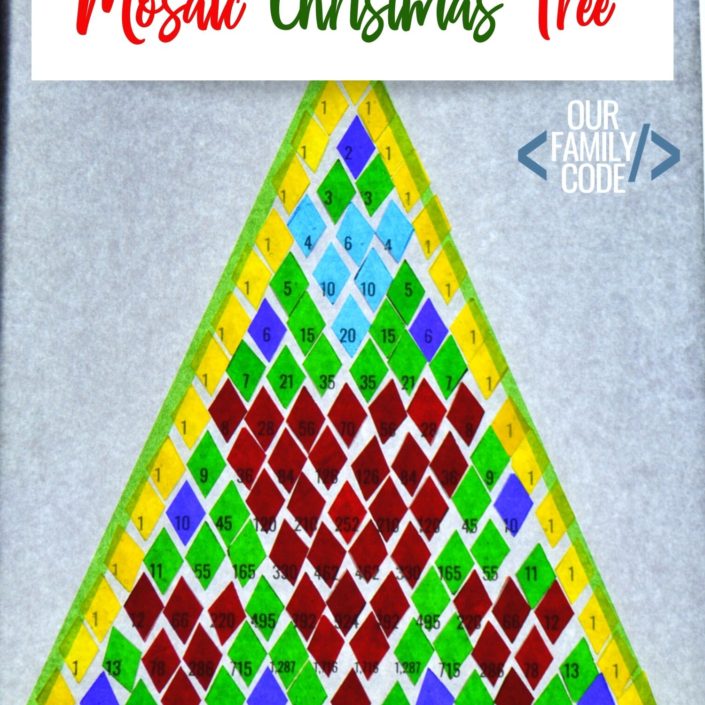
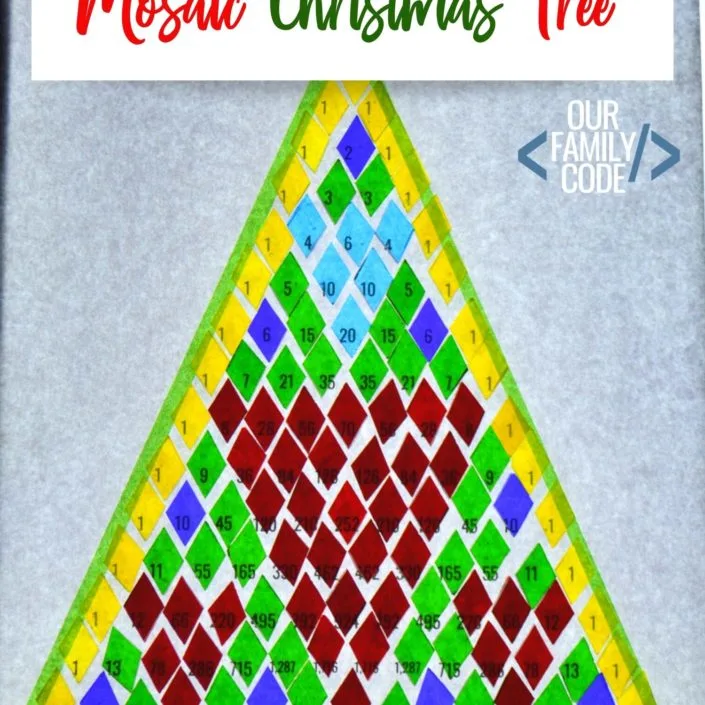
We turned Pascal’s Triangle into a Christmas tree to work on some math skills and create some awesome tile art!

This post contains affiliate links. As an Amazon Associate, Our Family Code earns from qualifying purchases. Please see our Disclosure Policy for more details.
What is Pascal’s Triangle?
Pascal’s Triangle is named after Blaise Pascal, a famous French Mathematician and Philosopher. However, the triangle and concept date back centuries in India, Iran, China, Germany, and Italy.
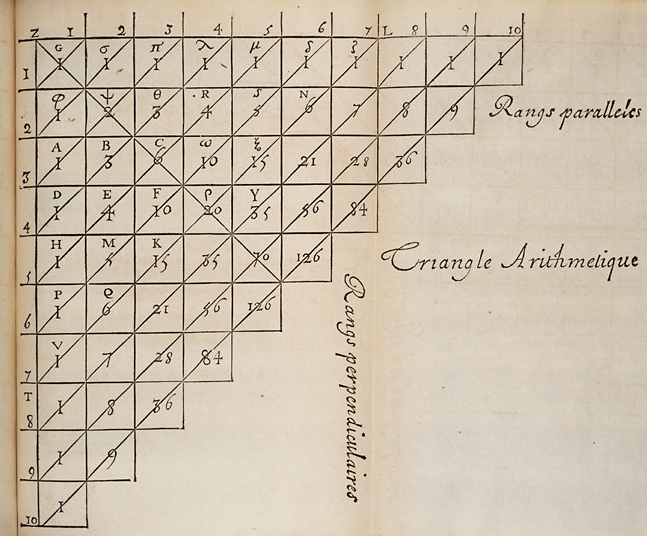
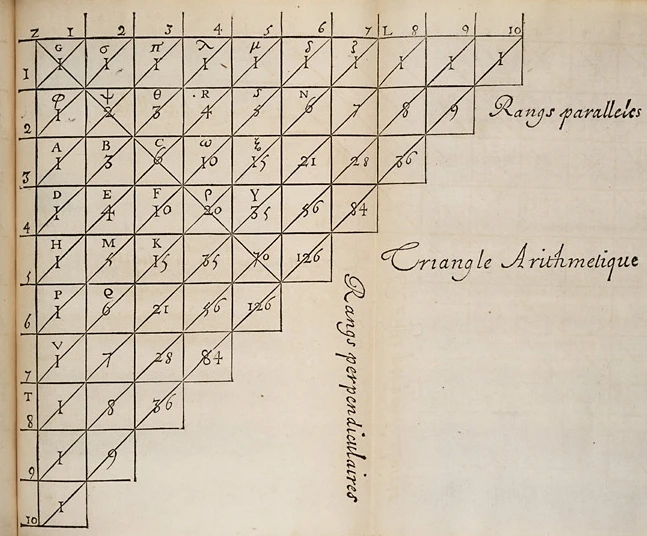
Pascal’s Triangle is a triangular array of binomial coefficients determined by binomial expansion. What is all of this crazy math talk?! Well, binomials are used in algebra and look like 4x+10 or 5x+2.
Basically, Pascal’s Triangle shows you the probability of any combination like the chances of you rolling heads or tails when flipping a coin!
When you look at the triangle, you’ll see the expansion of powers of a binomial where each number in the triangle is the sum of the two numbers above it.
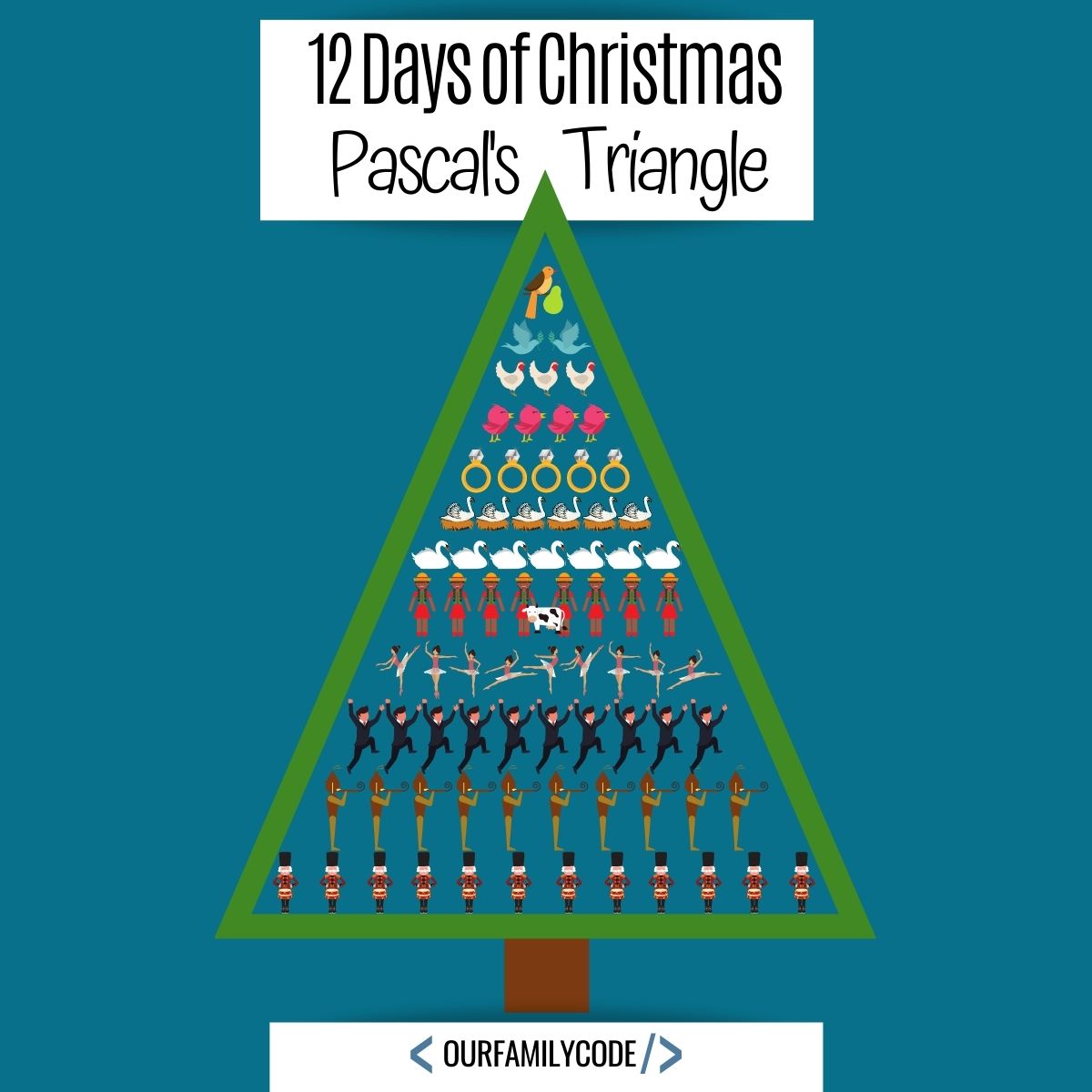
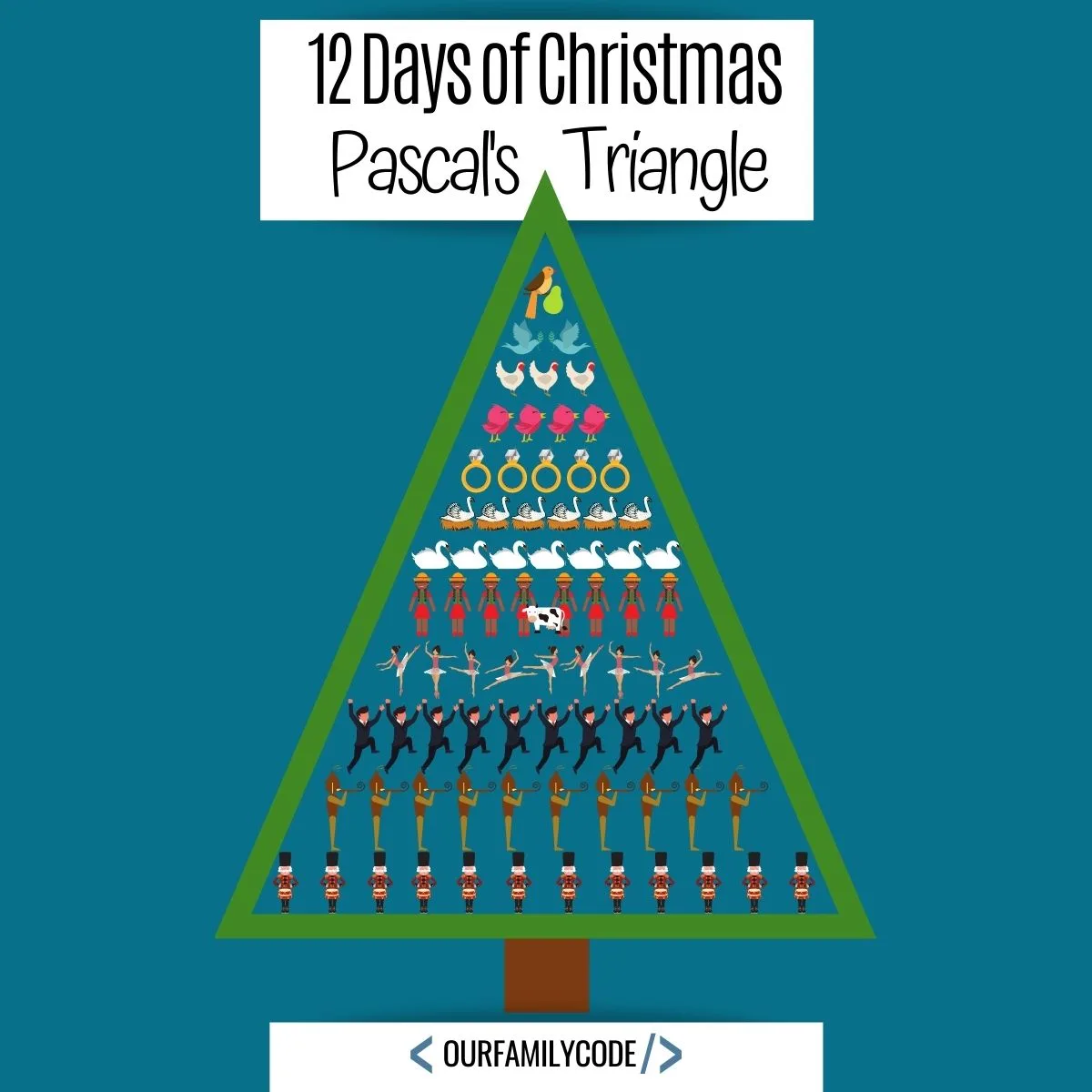
12 Days of Christmas Pascal’s Triangle
Figure out how many gifts are given in the 12 Days of Christmas with Pascal’s Triangle!
Patterns, Patterns, Patterns!
There are so many neat patterns in Pascal’s Triangle. The first diagonal of the triangle just contains “1”s while the next diagonal has numbers in numerical order.
The third diagonal has triangular numbers and the fourth has tetrahedral numbers. If you add up each row of Pascal’s Triangle, you’ll find the powers of 2 since they double each time. If you squish all of the numbers in each row together, you’ll find exponents of 11.
Pascal’s Triangle is also symmetrical! If you were to fold the triangle in half, the numbers on the right side are identical to the numbers on the right side.
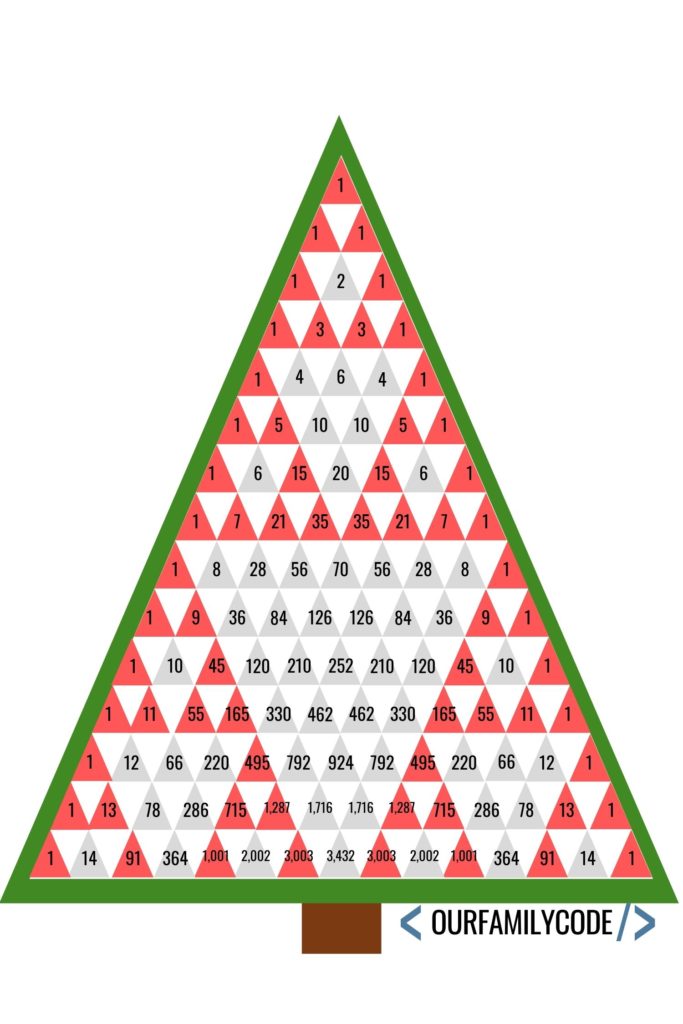
The pattern that I think is super cool is the Sierpinski Triangle, which can be found if you color all of the odd numbers in Pascal’s Triangle.
Sierpinski Triangle
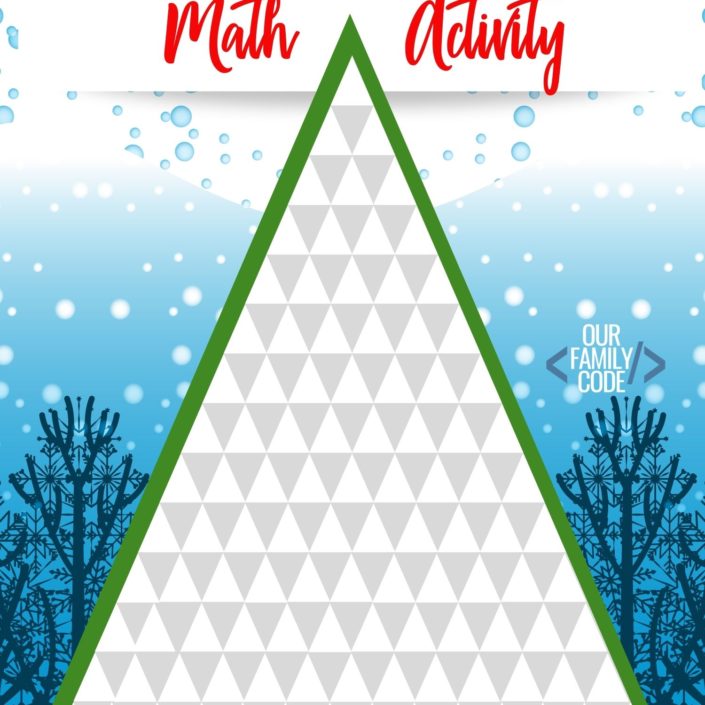
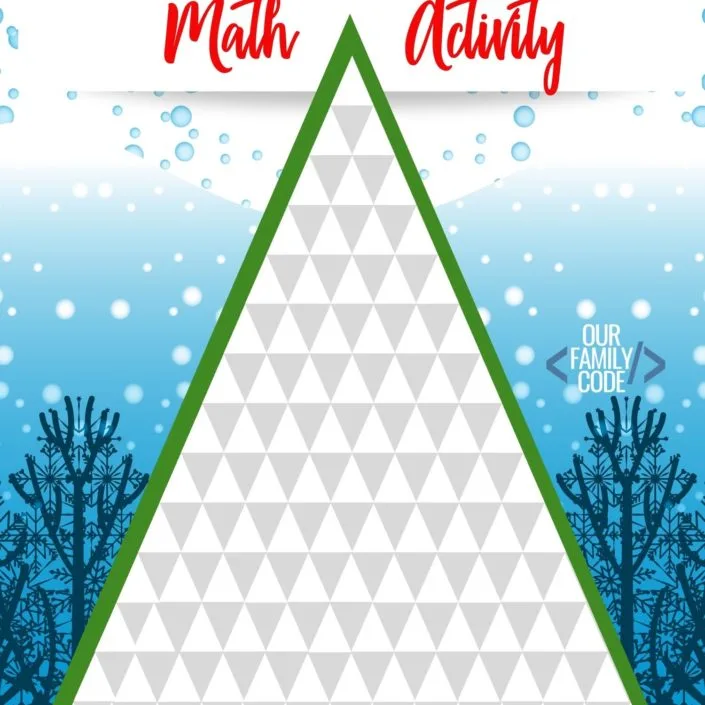
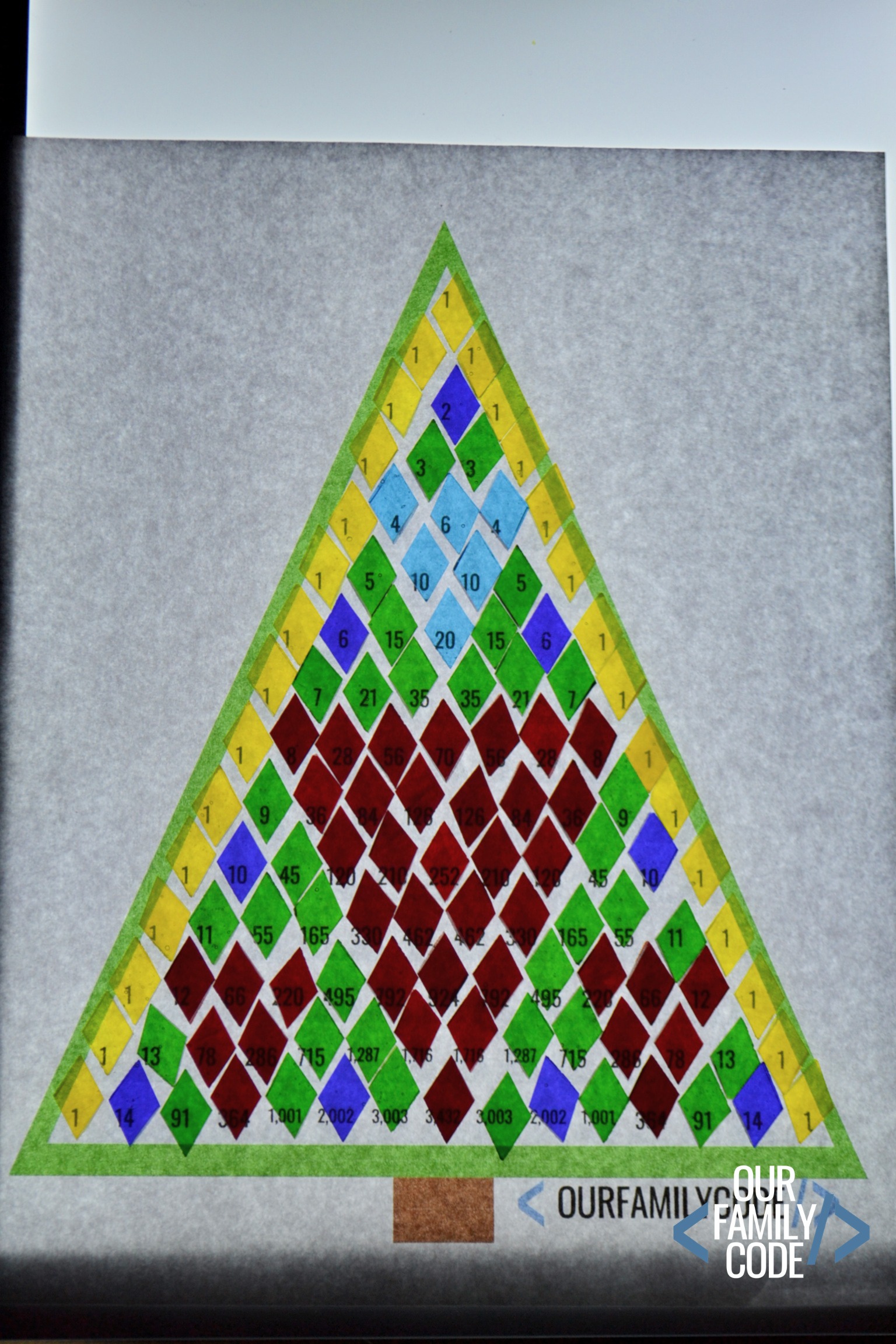
If you color all of the odd numbers in Pascal’s Triangle, you’ll see the Sierpinski Triangle, a fractal in the shape of a triangle with four equilateral triangles inside of it. To make your own Sierpinski artwork, use the Christmas tree Pascal’s Triangle worksheet.
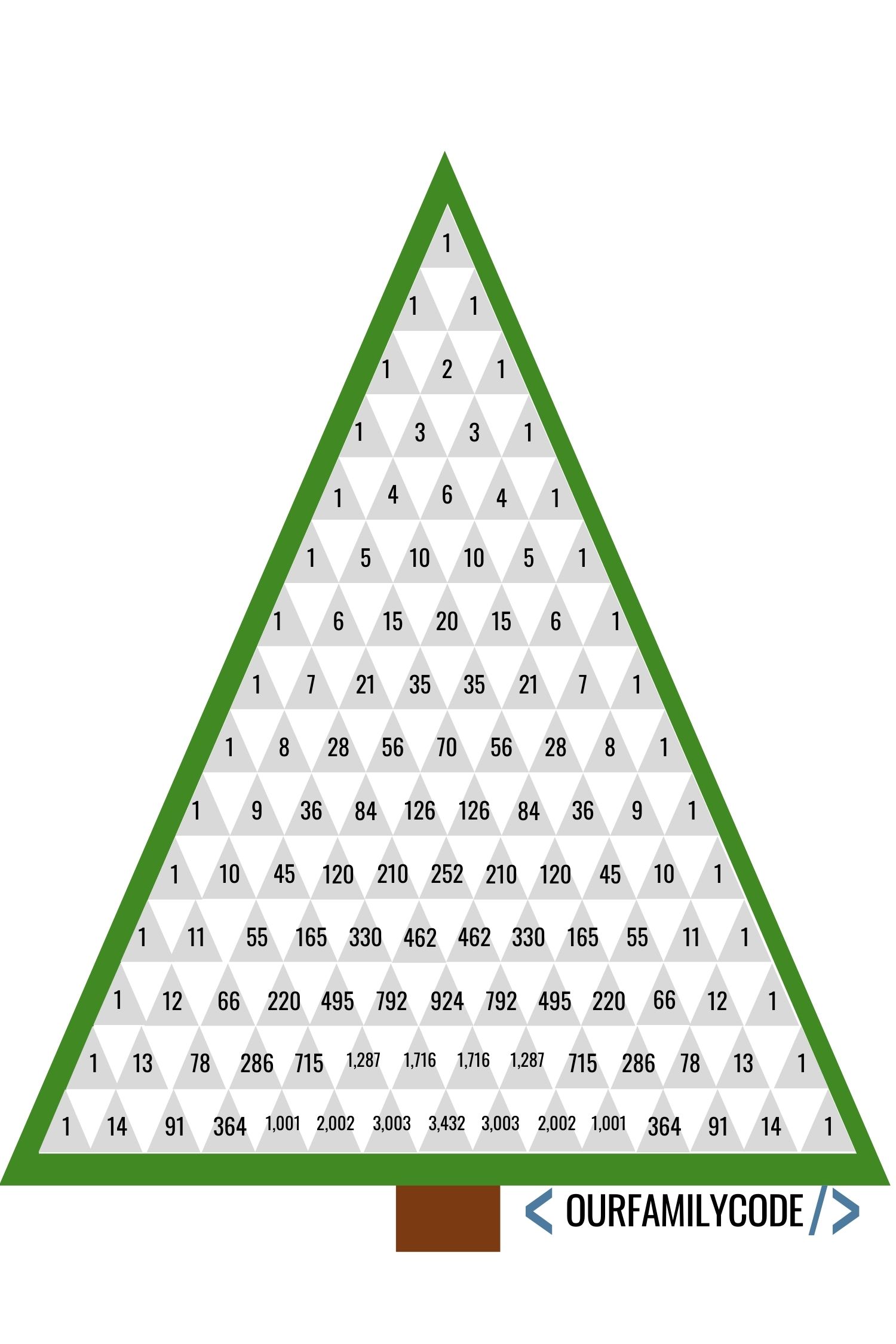
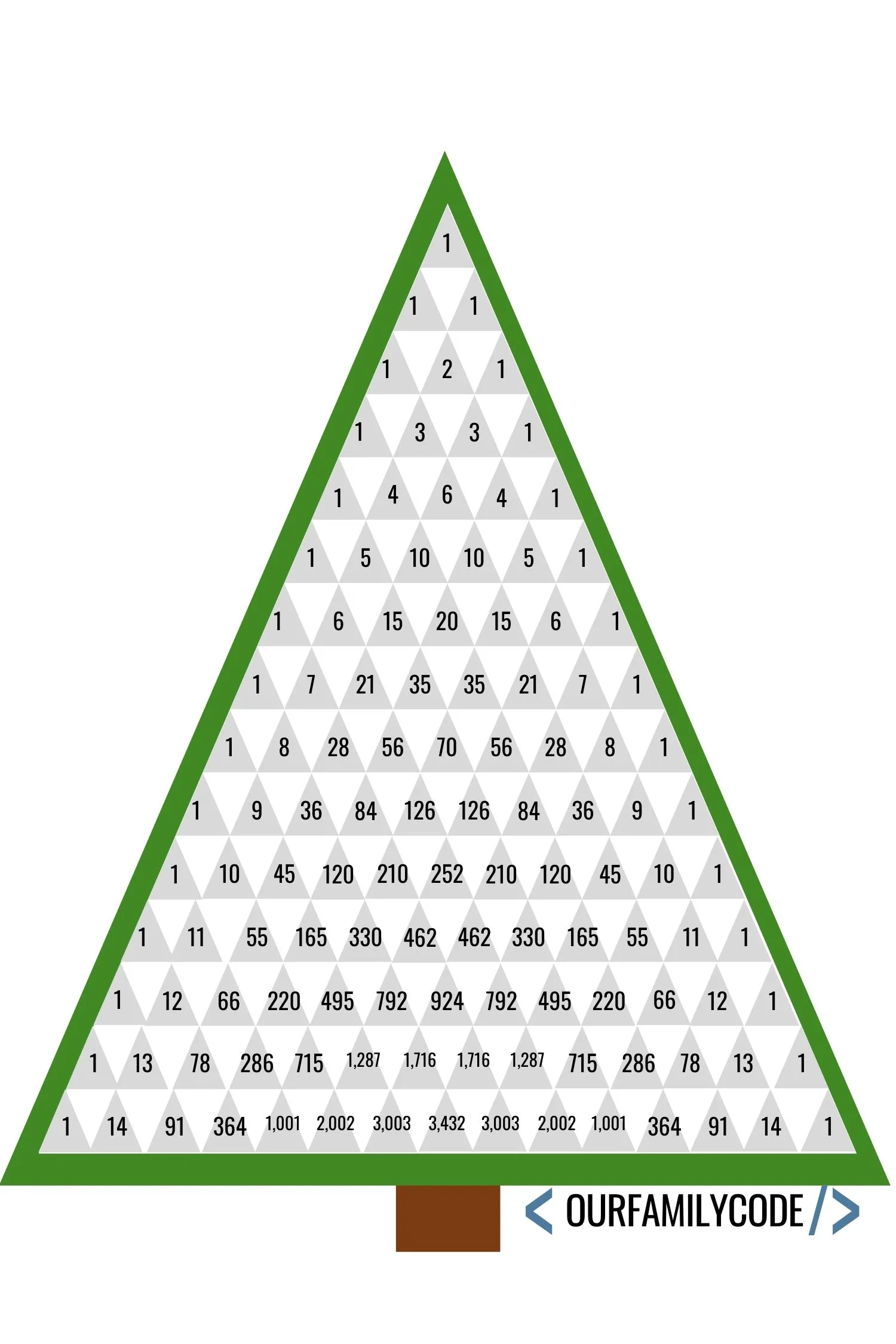
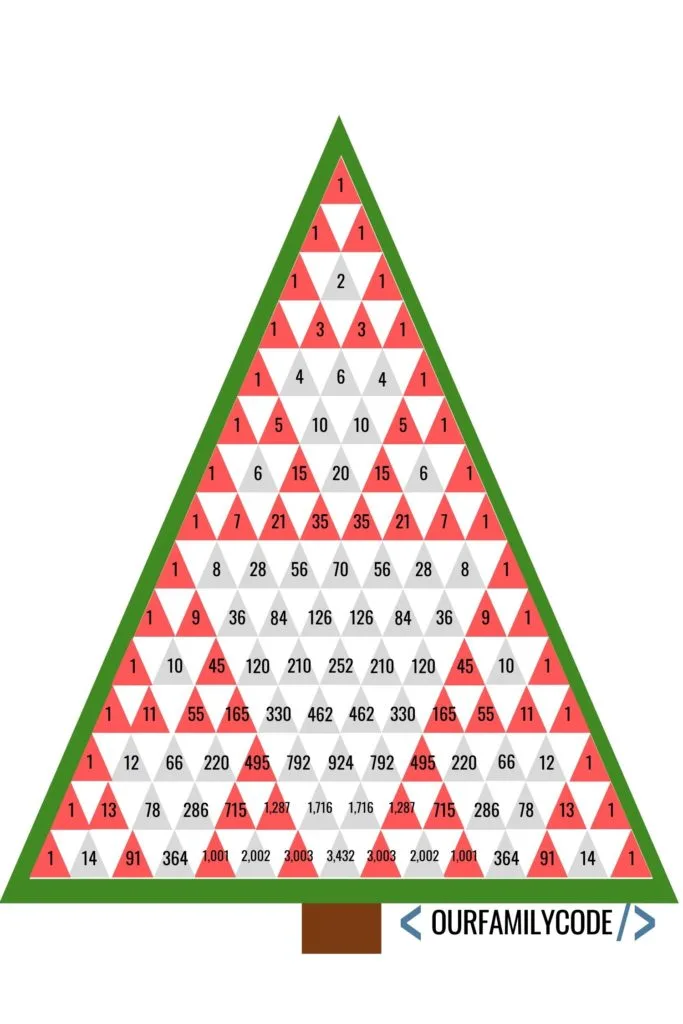
Complete Pascal’s Triangle Free Worksheets
Grab these free Pascal’s Triangle worksheets and use them to calculate the missing numbers. Remember that each number is equal to the sum of the two numbers above.
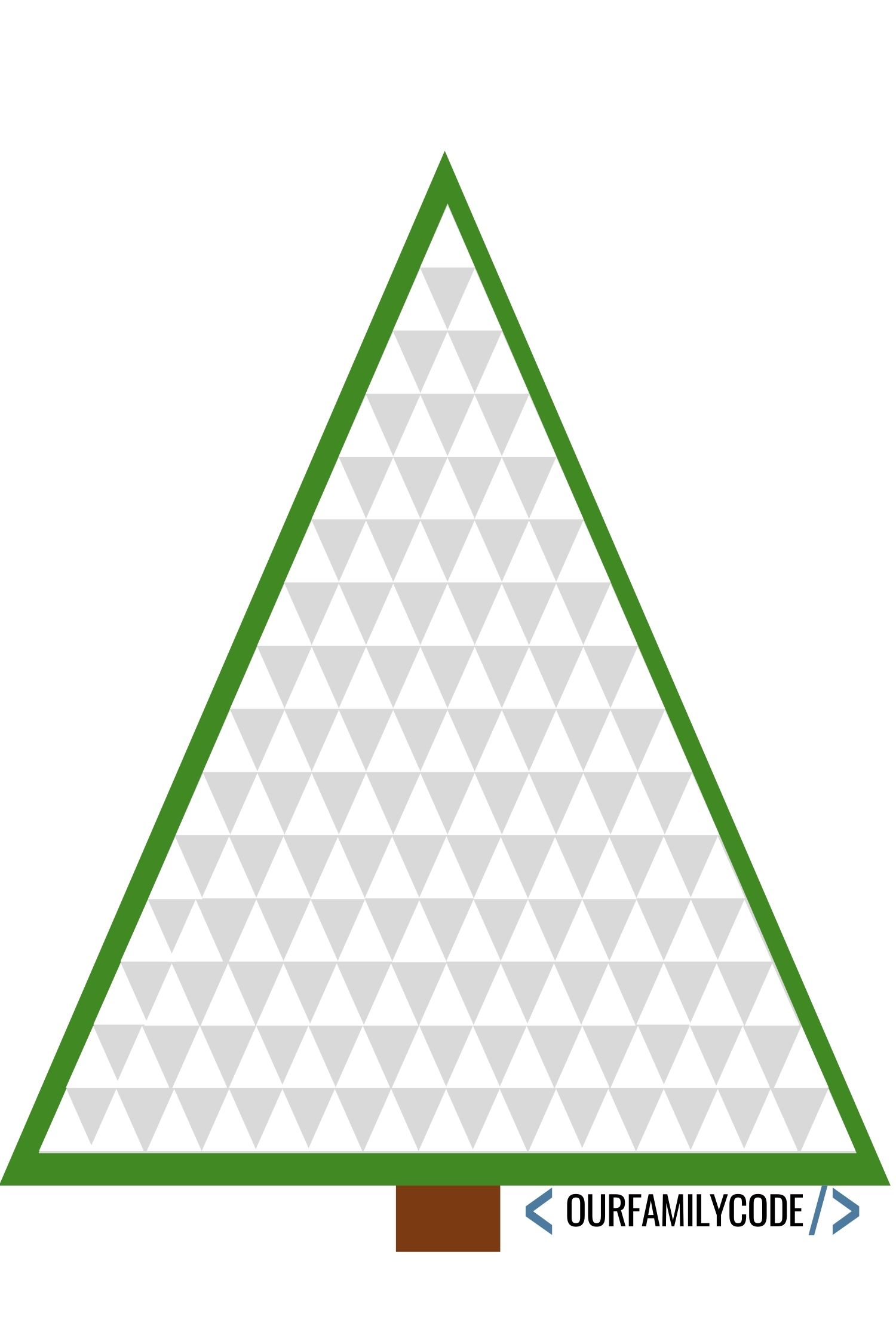
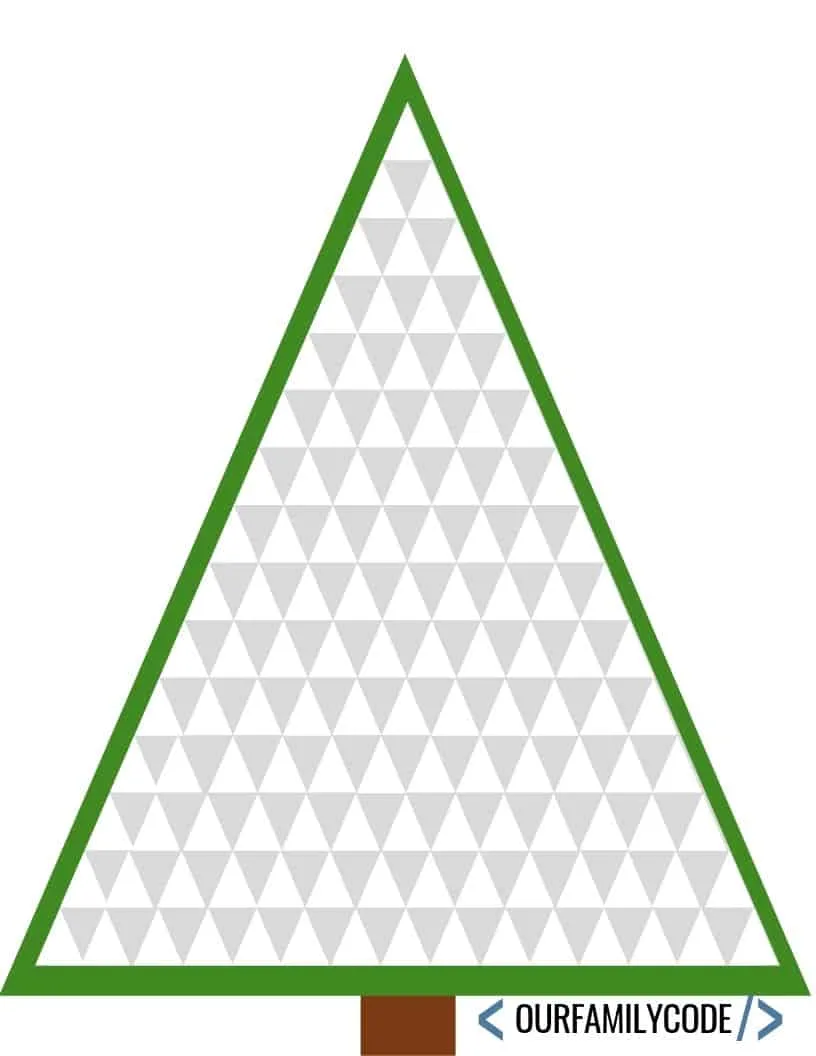
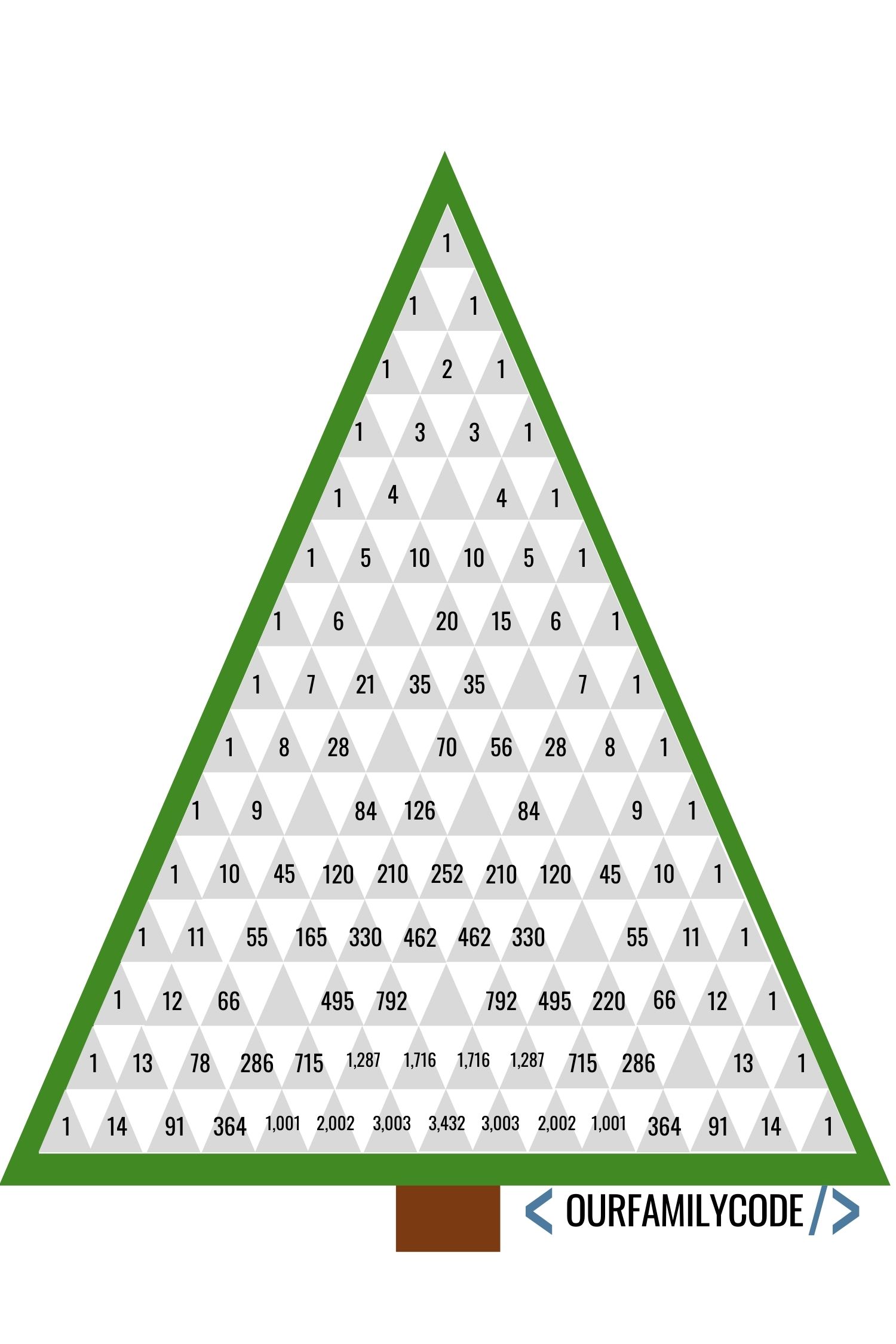
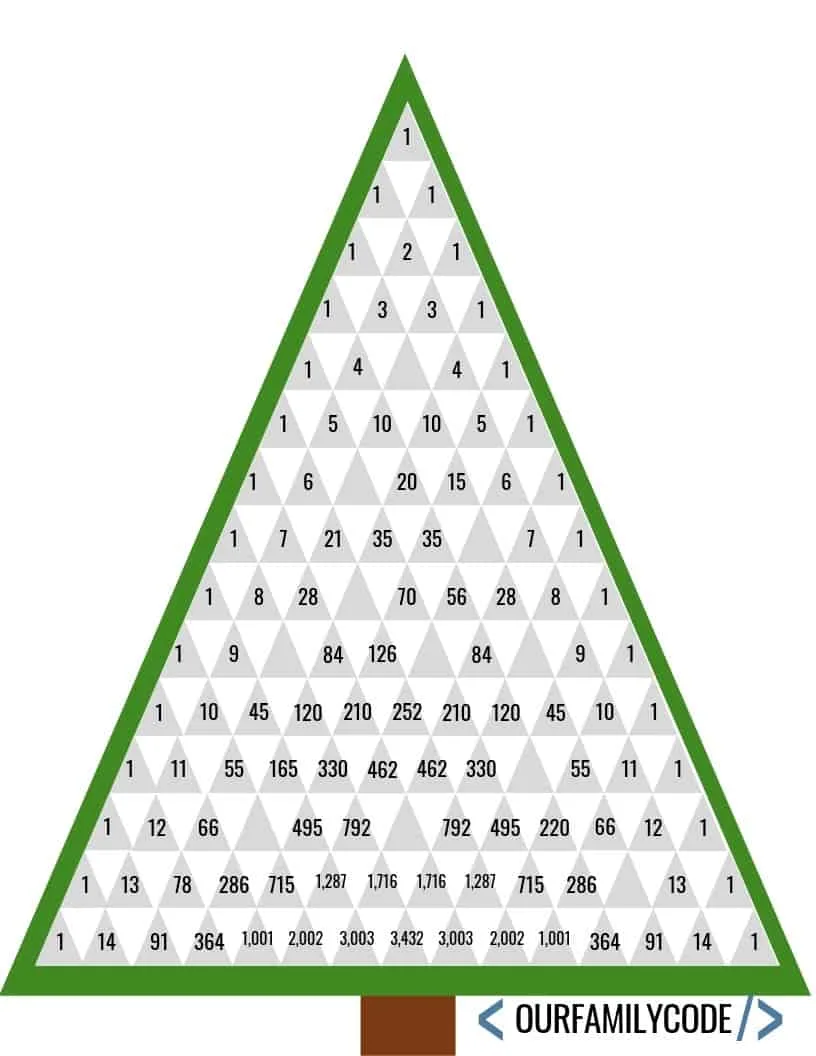
Create Some Beautiful Math Mosaic Artwork
We love tangrams at our house and have recently started applying our tangram skills to working with glass and ceramic tiles to create some pretty sweet artwork!
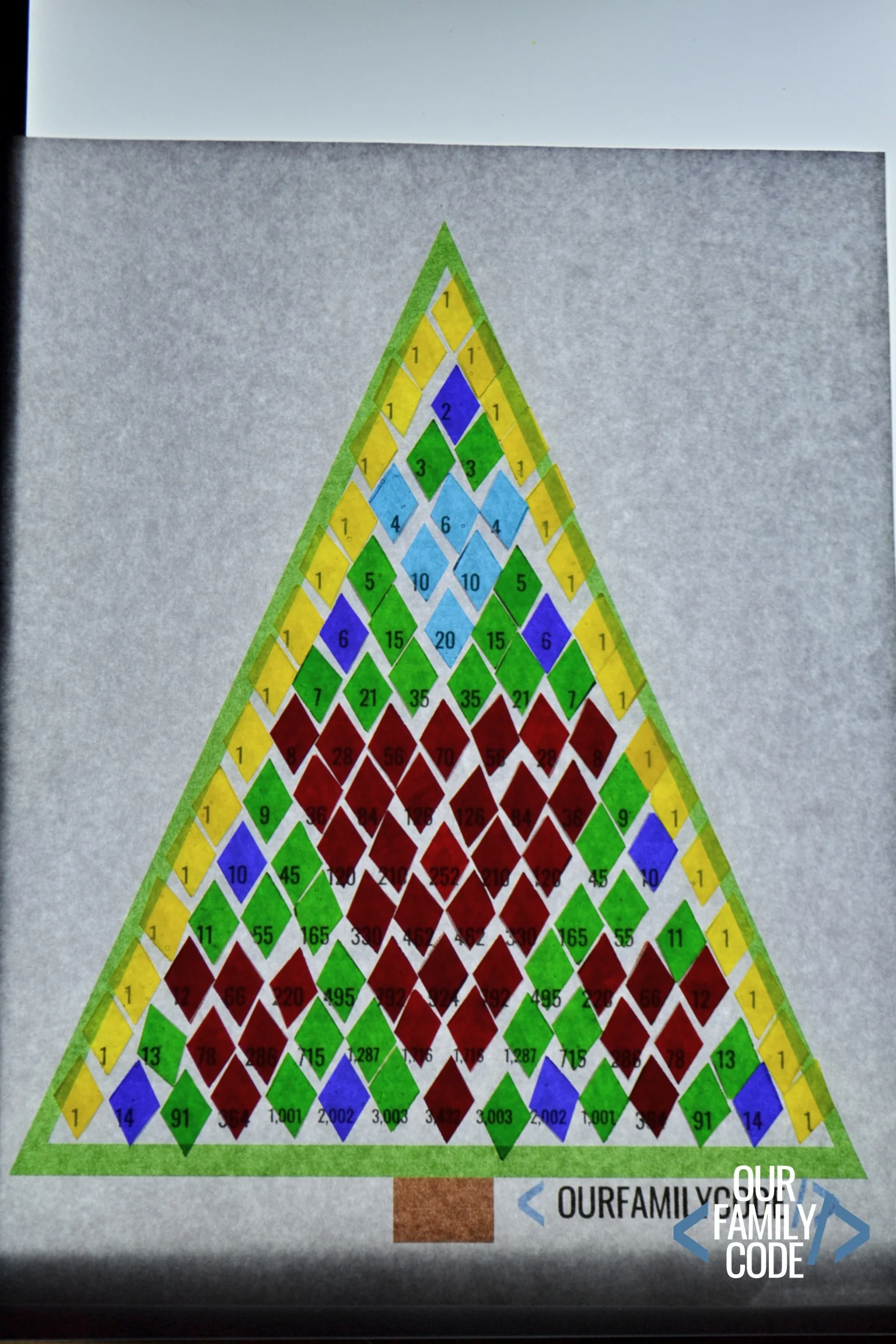
Check out our neat Sierpinski triangle art and grab some tiles and make your own. We didn’t glue our triangle together because my girls wanted to make symmetrical snowflakes and we needed some more tiles.
If you want to glue your pieces just use the glue to adhere them to mosaic mesh or onto a surface like the back of a picture frame and use the frame to surround your pieces and display.
Materials Needed:
- Triangle or Diamond shaped glass or ceramic tiles
- Lightboard (optional)
- Weldbond Multi-Purpose Adhesive Glue
- Mosaic Mesh
For our Sierpinski mosaic artwork, we used green and yellow diamonds for the odd numbers and blue and red diamonds for our even numbers.
The diamonds helped us cover the empty spaces on our grid a little easier than using double the triangles.
More Math + Art Activities
- Pi Necklace Coding Unplugged Coding Activity
- Teach the Fibonacci Sequence with this Easy Math & Art Activity!
- Finding Pi with Math Sun Catchers
- Amazing Math Art and Drawing Projects for Kids from Teach Beside Me
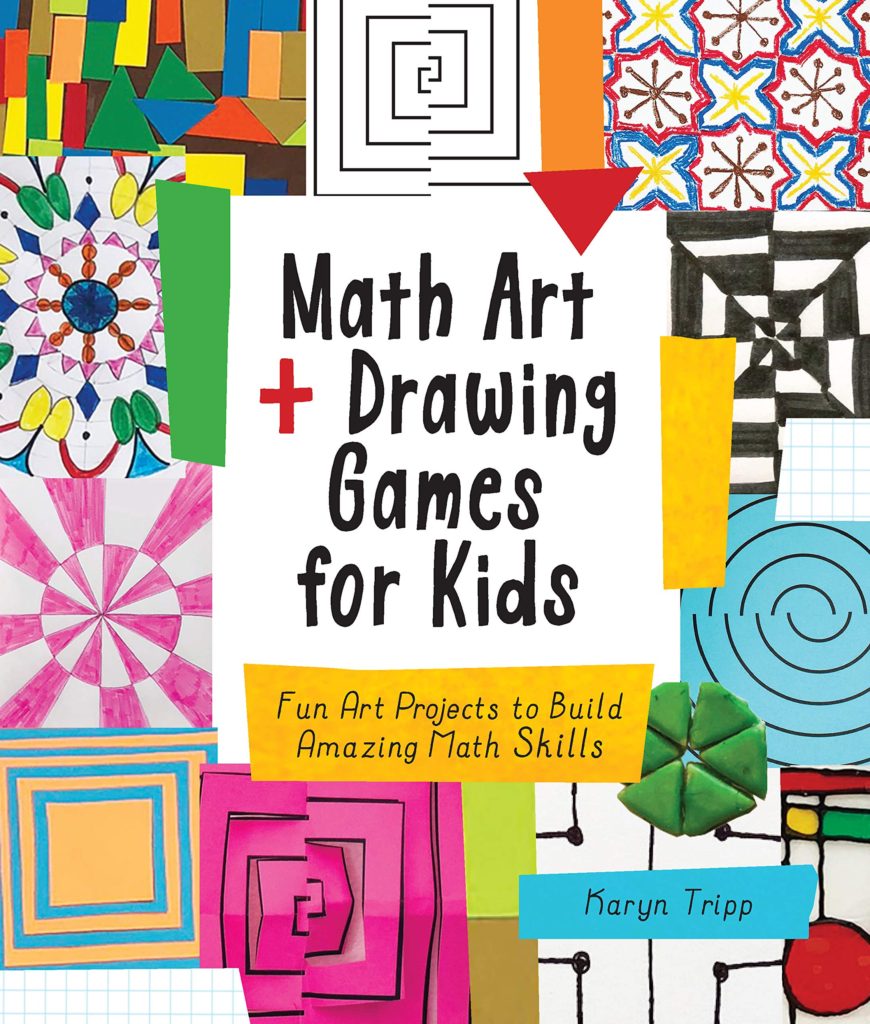
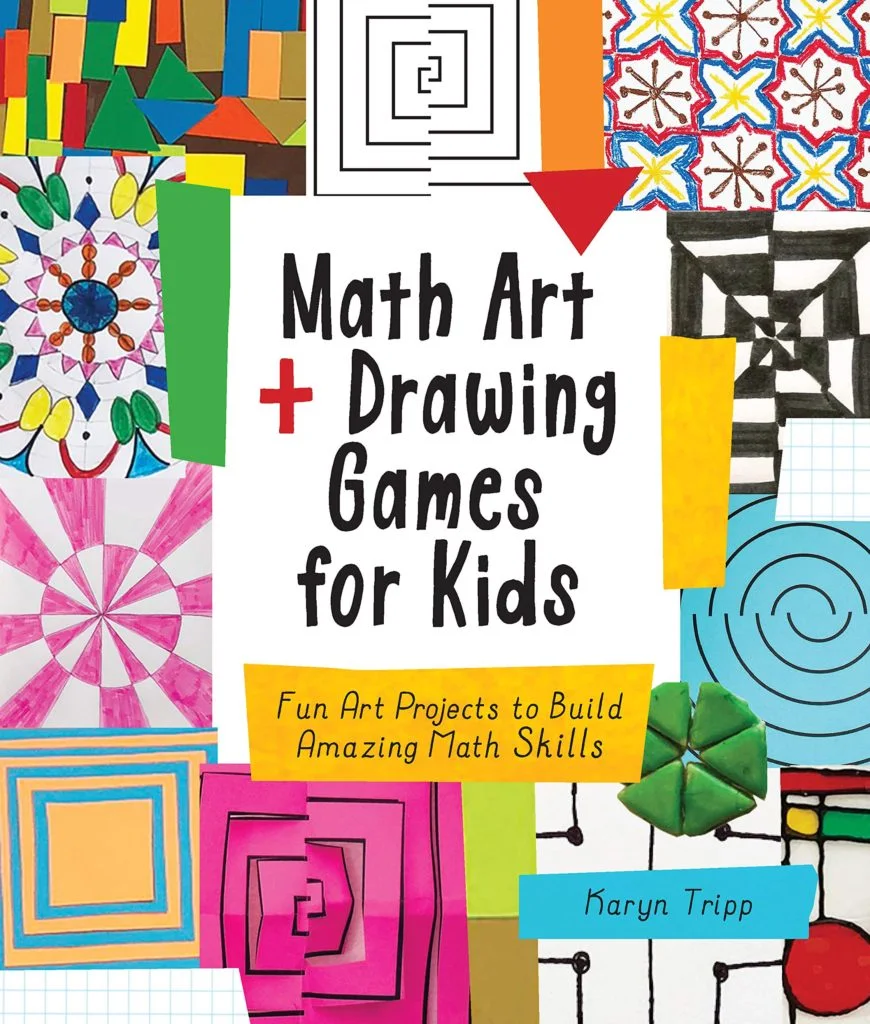
Our friend Karyn from Teach Beside Me just published an excellent math art book, Math Art and Drawing Games for Kids.
This book is filled with tons of incredible ideas to learn math through art and is great for both teachers and homeschoolers. You can purchase a copy by clicking the image.
PIN THIS IMAGE TO SAVE THIS ACTIVITY FOR LATER
Christmas STEAM
Find some more Christmas STEAM activities for kids!
Christmas Algorithm Art Unplugged Coding Activity
This Christmas tree algorithm art activity is an unplugged coding activity for kids K-8 to learn how everyday actions can be turned into a computer program.
Christmas Pixel Puzzles: Free Color by Number Activity for Kids
These Christmas Pixel Puzzles are a great way to introduce image representation on computers as well as work on number and color recognition.
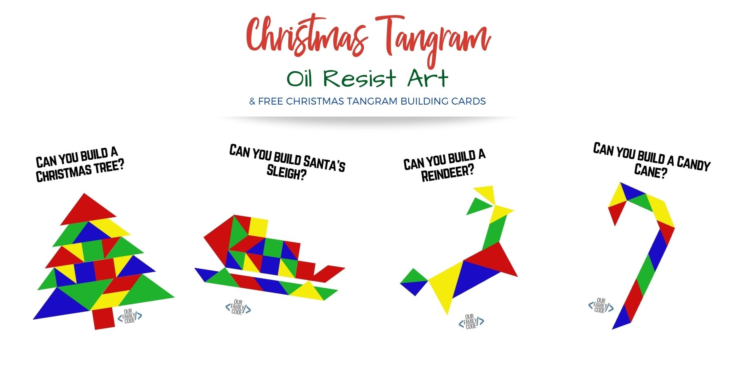
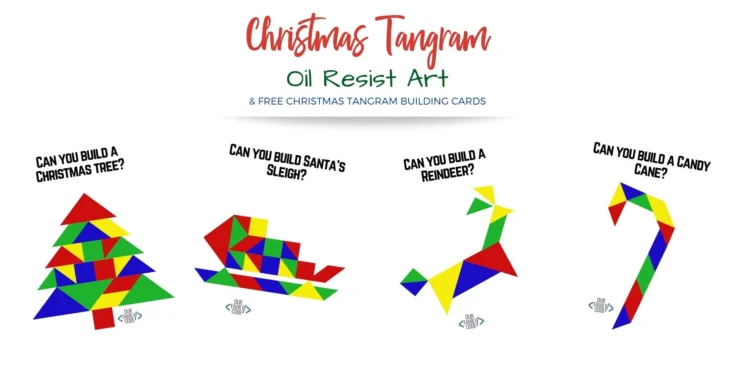
Christmas Tangram Oil Resist Art Preschool STEAM Activity
This activity adds a little science to tangrams to make Christmas tangram oil resist art this holiday season!
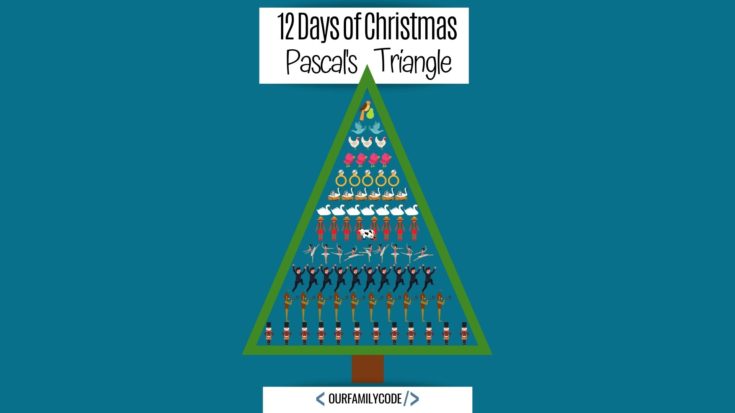
12 Days of Christmas Pascal's Triangle Math Activity
Learn about Pascal’s Triangle and make a Christmas tetrahedron with this 12 Days of Christmas challenge!
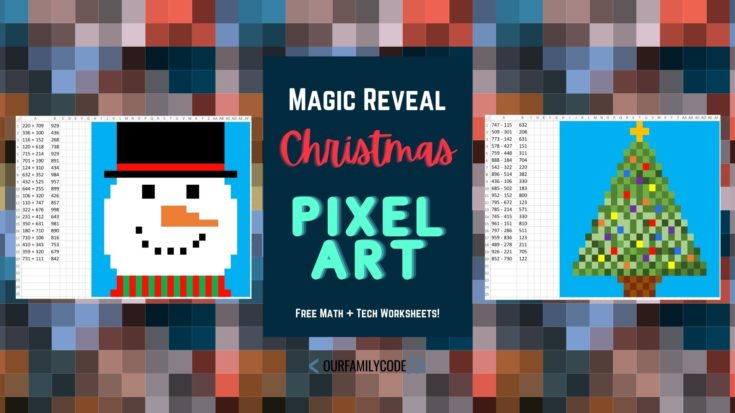

Magic Reveal Christmas Pixel Art Math + Tech Activity
Magic reveal Christmas pixel art is a super neat way to incorporate math and technology into a fun learning activity!
Dress the Elf With this Christmas Boolean Logic Activity
Trixie the Elf needs helping searching for the perfect outfit for each day of the week. Learn how to use boolean expressions to narrow down exactly the right outfit in this Christmas Elf boolean logic activity.
How to Make Crayon Resist Christmas Cards with Your Kids this Holiday Season!
This science + art crayon resist Christmas card activity is a great way to incorporate science into the holidays!
Communicate Like a Programmer with Christmas LEGO Building Cards
Test your communication skills by giving another person step-by-step directions on how to build a Christmas LEGO design without them seeing the final result.
Elf Engineer Zip Line STEAM Challenge for Elf on the Shelf
This Elf engineer zip line STEAM challenge for Elf on the Shelf is a fun way to add science to the season and learn about potential and kinetic energy!
25+ Elf on the Shelf STEAM Challenges: Become an Elf Engineer!
Become an Elf Engineer with these 25 Days of Elf on the Shelf STEAM challenges and free STEAM challenge cards!
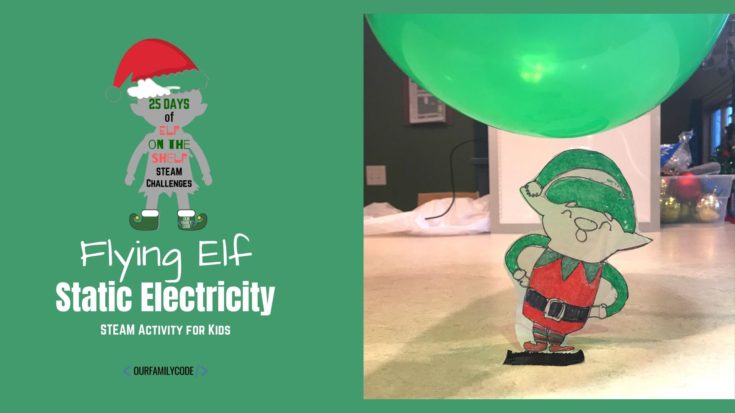
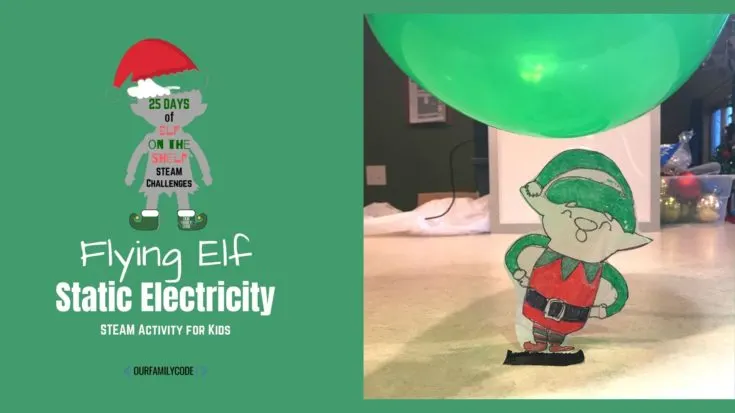
Flying Elf Static Electricity Balloon Challenge
This flying elf static electricity balloon STEAM challenge is super easy to set up and a great elf engineer activity for your Elf on the Shelf to bring!
Meet Toni, the Maker Mom behind Our Family Code

Hey there, I’m Toni! I’m a software engineer and Maker Mom that finds my joy in unleashing my children’s curiosity by exploring STEAM concepts with my fantastic five!
When I’m not chasing toddlers or raising tweens, you can find me tearing things up and putting them back together over here at Our Family Code.
I am the owner and content creator of multiple educational websites designed to increase access to STEAM & STEM education with a focus on teaching computer science and coding to kids of all ages!
You can also find out more about me by visiting ToniGardner.com!