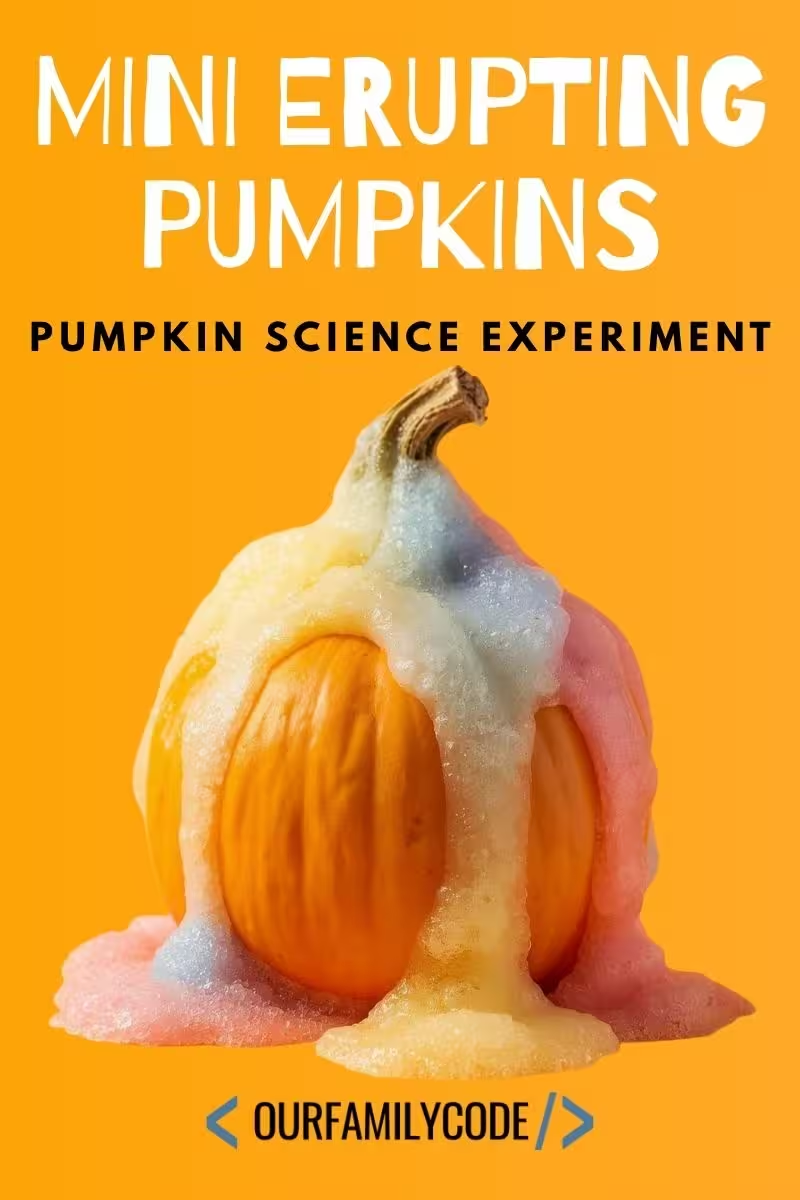
Make mini erupting pumpkins with baking soda and vinegar for an easy fall science experiment. Kids can observe an acid-base reaction, predict what will happen, and test how changing one variable affects the foam.
Easy Mini Erupting Pumpkins Science Experiment
If your kids love messy, hands-on science, they’ll enjoy turning ordinary mini pumpkins into bubbling volcanoes. This supervised chemistry activity uses a familiar baking soda-and-vinegar reaction and gives children an immediate, visible way to observe gas formation.
The best part? It’s a low-prep STEM activity and you only need a few household ingredients: baking soda, vinegar, and pumpkins. It’s a quick-setup, high-impact activity that fits perfectly into any Halloween STEM lesson, fall classroom unit, or family science day.
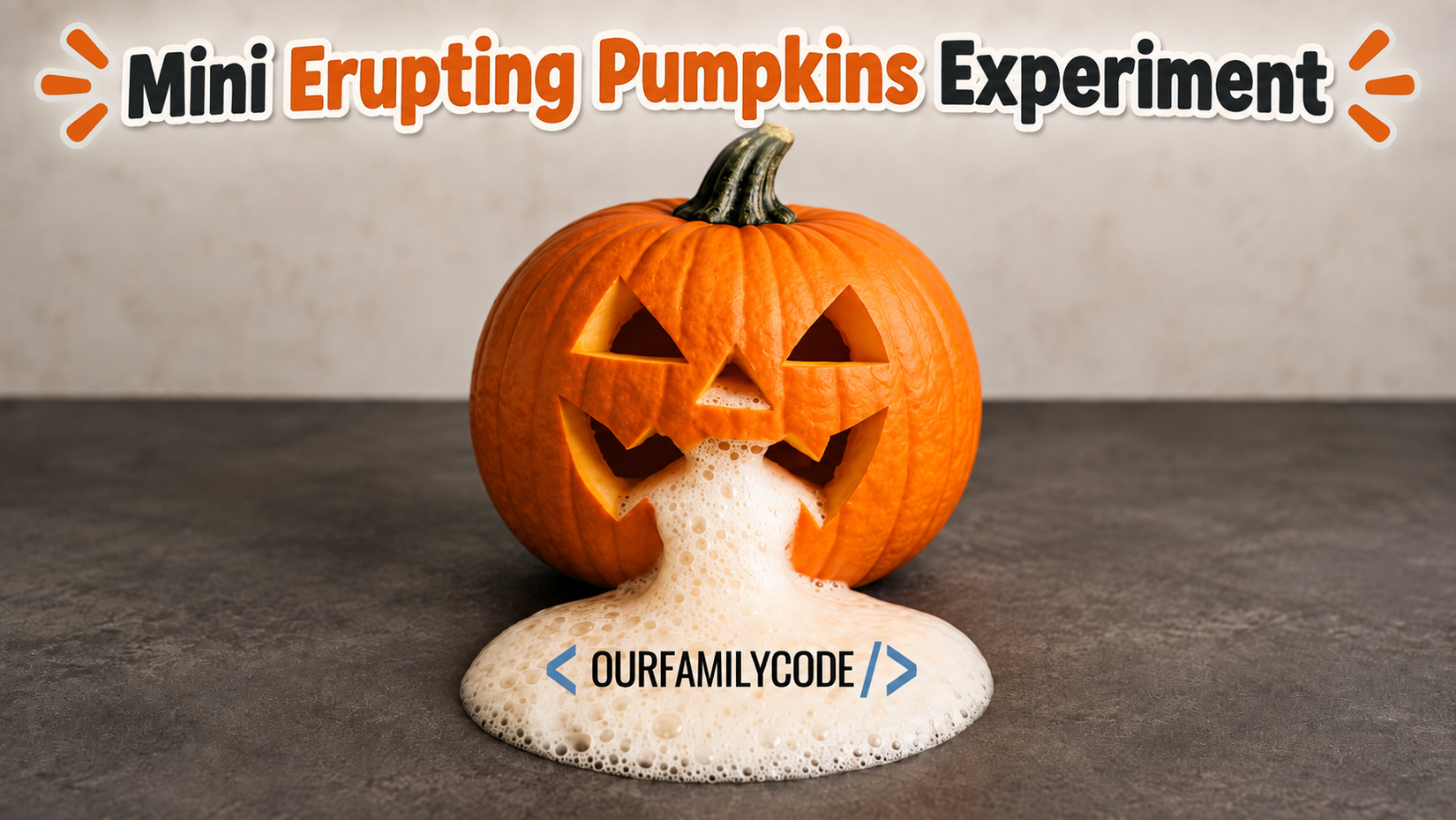
Mini Erupting Pumpkins at a Glance
- Best for: Preschool through middle school with adult supervision
- Time: About 15–25 minutes
- Learning: Acid-base reactions, gas formation, variables, prediction, and observation
- Mess level: Medium to high; use a rimmed tray or work outdoors
What Are Mini Erupting Pumpkins?
Mini erupting pumpkins combine chemistry and creativity by placing a classic baking soda-and-vinegar reaction inside a real pumpkin. The activity is simple enough for young learners and can be extended into a controlled-variable investigation for older students.
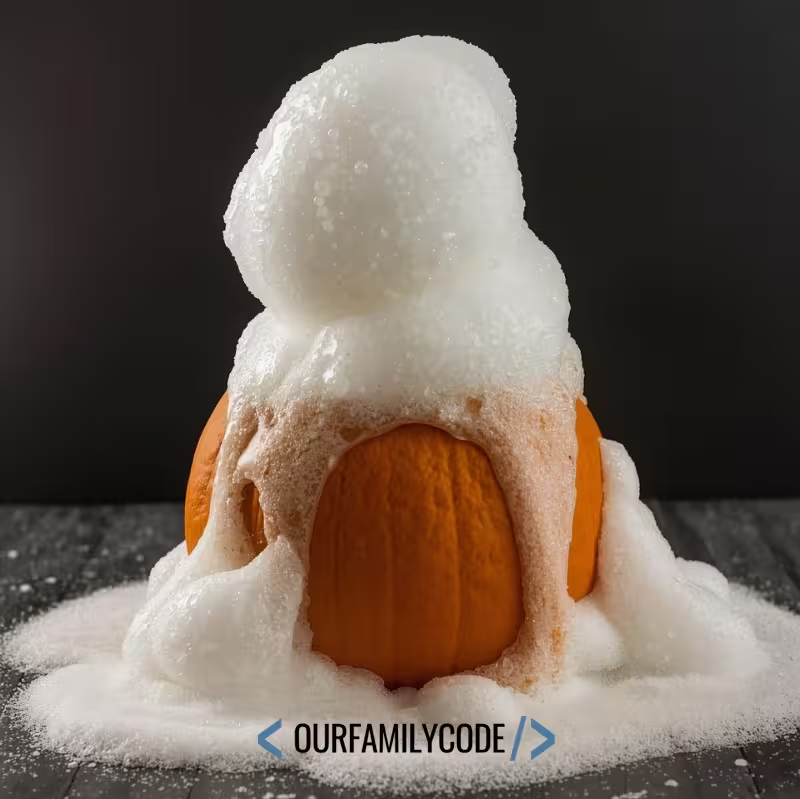
Instead of a clay volcano, you’ll use real pumpkins as your eruption chambers. When you mix baking soda (a base) and vinegar (an acid) inside your pumpkin, they react to produce carbon dioxide gas. That gas escapes as fizzing bubbles, causing a dramatic overflow of colored foam.

Kids can experiment with different ratios, colors, and pumpkin sizes to see how each variable changes the reaction.
This simple activity covers major learning concepts including:
- Chemical reactions and gas formation
- The difference between physical and chemical changes
- The states of matter (solid, liquid, gas)
- Observation and prediction skills
Science Concept: The Chemical Reaction
Let’s break it down for your young scientists.
When the acetic acid in vinegar reacts with sodium bicarbonate in baking soda, the reaction produces carbon dioxide gas (CO₂), water, and sodium acetate. The visible bubbles are carbon dioxide escaping from the mixture.
Equation:
NaHCO₃ + CH₃COOH → CO₂ + H₂O + NaCH₃COO
To make the reaction even more exciting, adding dish soap traps the gas in tiny bubbles, creating foamy eruptions that ooze out of the pumpkin.
You might also like: kaBOOm Exploding Baggie Ghosts Chemistry Activity
What You’ll Need to Make Mini Erupting Pumpkins
This Halloween science experiment uses common kitchen ingredients and works with one pumpkin or a small group set.
Safety note: Adult supervision is required. An adult should cut and hollow the pumpkins. Keep the mixture away from eyes and mouths, wash hands after the activity, and never seal the reaction inside a rigid container because gas pressure can build.
Supplies:
- 1 or more mini pumpkins or sugar pumpkins
- 1–2 tablespoons baking soda per pumpkin
- About 1/4 cup vinegar per pumpkin, plus extra for repeated trials
- Food coloring or washable liquid watercolor, optional
- 1–2 teaspoons dish soap per pumpkin, optional for thicker foam
- Measuring spoons and cups
- A rimmed tray or large dish
- A spoon, cup, or pipette for adding vinegar
Optional investigation tools:
- Plastic pipettes for controlled additions
- A timer and ruler for measuring eruption duration and height
- A science notebook or printable observation sheet
How to Make Mini Erupting Pumpkins
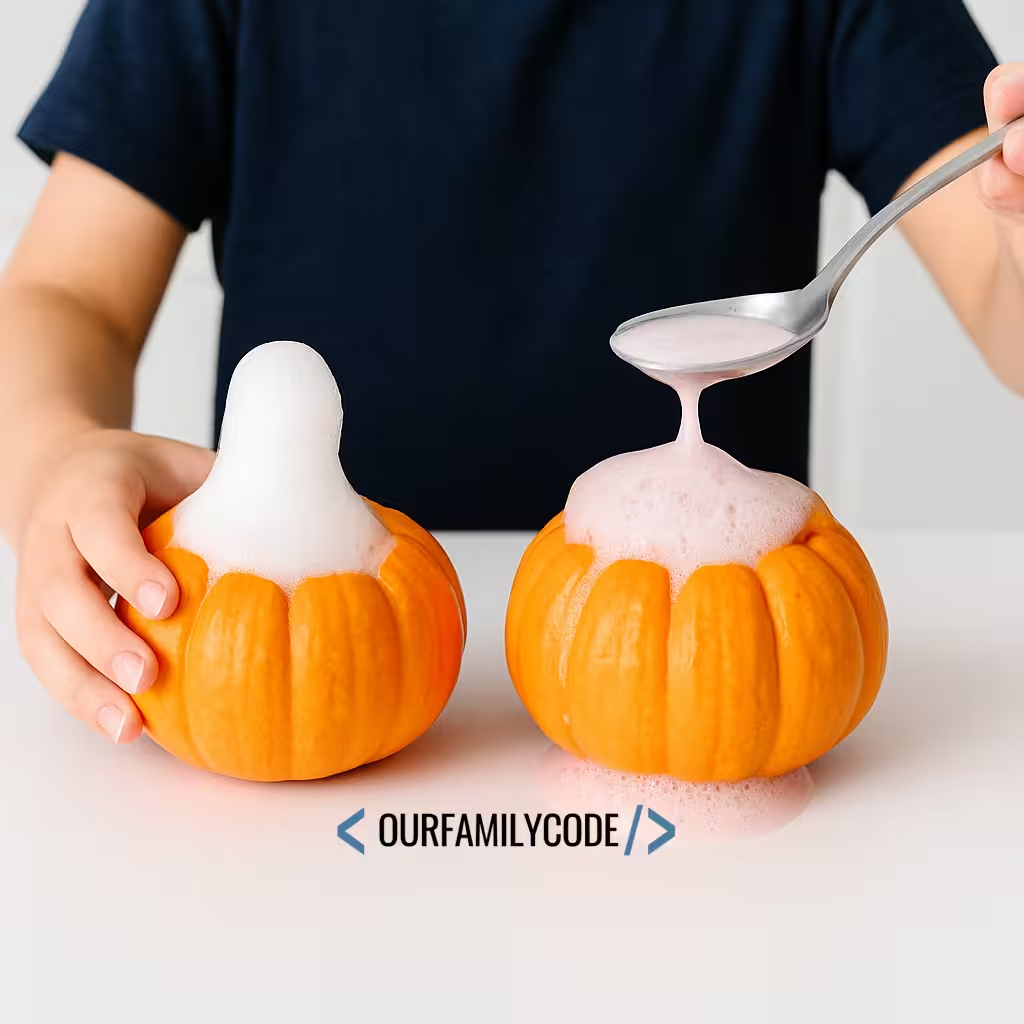
- Prepare the pumpkin: Have an adult slice off the top and scoop out the seeds and pulp.
- Add baking soda: Place 1–2 tablespoons inside the hollow pumpkin.
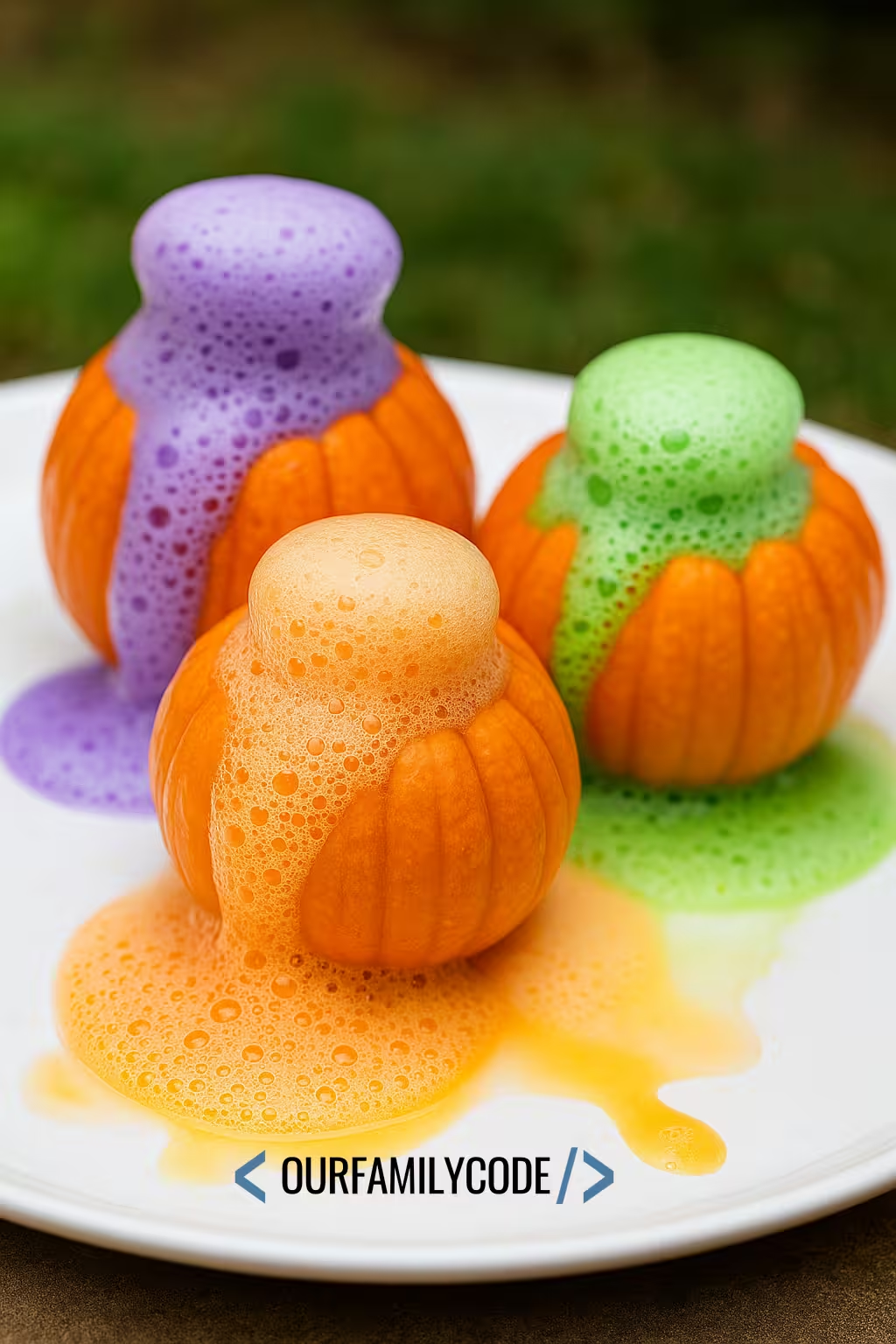
- Add soap and color: Mix in 1–2 teaspoons of dish soap and a few drops of coloring if you want thicker, colorful foam.
- Make a prediction: Ask children what they expect to happen and which ingredient they think will affect the eruption most.
- Start the reaction: Slowly add about 1/4 cup vinegar. Step back and observe the bubbles and foam.
- Test one variable: Repeat the experiment while changing only one factor, such as vinegar temperature or the amount of baking soda.
Watch the foam bubble and spill out like a Halloween volcano!
Tip: Use a tray or baking sheet under the pumpkins for easy cleanup.
For Educators & Parents
Classroom Tip: Divide students into small groups. Let each team experiment with different vinegar ratios or temperatures to see which creates the biggest eruption.
Learning Connections:
- Science: chemical reactions, states of matter
- Math: measuring and comparing quantities
- Language Arts: describing observations with vivid verbs and adjectives
Educational Standards Alignment
This activity can support age-appropriate discussions about matter, observable properties, and evidence of chemical change. Relevant Next Generation Science Standards connections include:
- 2-PS1-1: Plan and conduct an investigation to describe and classify materials by observable properties.
- 5-PS1-2: Measure and graph quantities to provide evidence that matter is conserved. To address this expectation directly, adapt the reaction to a closed bag or balloon system so the carbon dioxide is captured.
- MS-PS1-2: Analyze and interpret evidence about substances before and after they interact to determine whether a chemical reaction occurred.
You can also integrate math and language arts by timing eruptions, measuring foam height, graphing results, and writing evidence-based observations.
Learning Through Play
This erupting pumpkin science experiment isn’t just fun, it’s full of teachable moments. Use it to spark discussion and guide inquiry-based learning.
Discussion Questions
Encouraging kids to analyze what they see builds critical thinking skills and reinforces the scientific method.
- What did you notice when the vinegar touched the baking soda?
- How could you make the eruption bigger or slower?
- What do you think the bubbles are made of?
- What happened when we added dish soap or food coloring?
Scientific Skills Practiced
- Predicting outcomes
- Observing changes
- Comparing results
- Recording data
- Drawing conclusions
Classroom Connections
Teachers love this Halloween STEM activity because it’s versatile and engaging across age groups.
For Preschool & Kindergarten:
Focus on sensory play, colors, and cause-and-effect. Use droppers instead of pouring to strengthen fine motor skills.
For Elementary Students:
Introduce vocabulary like acid, base, reaction, and gas formation. Have students hypothesize and compare pumpkin sizes or ingredient ratios.
For Middle School Learners:
Balance the chemical equation, compare reaction rates, or capture the carbon dioxide in a balloon so students can investigate gas production without losing it to the air.
Classroom tip: Set up multiple pumpkins and let each group test one variable, such as the amount of baking soda, vinegar temperature, or pumpkin size. Keep every other condition the same.
Cleanup Tips
Wipe up spills and rinse the tray with warm water. Compost the pumpkin only if you used pumpkin, baking soda, vinegar, and a small amount of food coloring. If you added dish soap, glitter, paint, or other materials, follow your local disposal guidance instead.
Want another pumpkin experiment? Compare this reaction with the foaming pumpkin, pumpkin geyser, and rubber-band challenge in our four pumpkin science experiments.
Ways to Extend the Investigation
- Test different food-color combinations and observe how the foam mixes.
- Use a pipette to control how quickly vinegar enters the pumpkin.
- Measure eruption height and duration, then graph the results.
- Decorate the outside of the pumpkin before an adult cuts it open.
- Have children name their pumpkin volcanoes and write a short observation or conclusion.
These additions bring art, measurement, experimental design, and science communication into the activity.
Key Takeaways
The Mini Erupting Pumpkin experiment teaches:
- The basics of chemical reactions
- How gases form and expand
- Observation and prediction skills
- Cause-and-effect relationships
It’s one of the easiest pumpkin science experiments for kids to set up, but it leaves a huge impact — visually, educationally, and memorably.
Whether you’re a teacher planning a Halloween STEM day or a parent looking for educational fun, this activity delivers science magic with every fizz and pop.
What causes mini pumpkins to erupt?
When vinegar reacts with baking soda, the reaction produces carbon dioxide gas. Dish soap traps the gas in bubbles, creating the foamy eruption.
How much baking soda and vinegar should I use?
Start with 1–2 tablespoons of baking soda and about 1/4 cup of vinegar per mini pumpkin. Adjust gradually for the pumpkin’s size and keep it on a rimmed tray.
Is the erupting pumpkin experiment safe for kids?
It is appropriate with adult supervision. An adult should cut the pumpkin. Keep the mixture out of eyes and mouths, wash hands afterward, and never seal the reaction inside a rigid container.
Can I use a full-size pumpkin?
Yes. A full-size pumpkin works, but you may need more baking soda and vinegar. Increase the amounts gradually and conduct the experiment outdoors or on a large rimmed tray.
Can the pumpkin go in the compost afterward?
Compost it only if you used pumpkin, baking soda, vinegar, and a small amount of food coloring. If you added dish soap, glitter, paint, or other materials, follow local disposal guidance.