

Have leftover Halloween candy? Before everyone eats it, save a few pieces for science.
In this candy chemistry experiment, kids investigate whether different candies contain acids by dissolving them in water and adding baking soda. If acid is present, it reacts with the baking soda and produces carbon dioxide gas, which we can observe as fizzing and bubbles.
We tested several types of candy, compared our observations, and used the experiment to practice making a hypothesis, identifying variables, and recording results.
It’s an easy Halloween candy science experiment that turns leftover treats into a hands-on chemistry lesson.
Looking for more spooky science? This experiment is part of our collection of 31+ Halloween STEM activities for kids, including erupting pumpkins, apple mummies, coding projects, engineering challenges, and more.

Is Sour Candy Acidic?
That mouth-puckering sour flavor has to come from somewhere.
Many sour candies contain food acids such as citric acid, malic acid, tartaric acid, or fumaric acid. Manufacturers use these ingredients to create the tart flavor we associate with sour candy.
Baking soda, also called sodium bicarbonate, is a base.
When an acid reacts with sodium bicarbonate, the reaction can produce carbon dioxide gas. Those carbon dioxide bubbles give us a visible clue that an acid-base reaction is occurring.
That makes baking soda a fun tool for comparing different candies.
However, this experiment does not give us an exact pH measurement.
The amount of bubbling can be affected by several things, including the type and amount of acid in the candy, how much candy dissolves, the size of the sample, the amount of baking soda, and the temperature of the water.
Instead of asking which candy has the lowest exact pH, a better question for this experiment is:
Which candy produces the strongest observable reaction with baking soda under the same testing conditions?
The Science Behind the Candy Chemistry Experiment
Acids and bases can react with each other in what is called an acid-base reaction.
When an acid reacts with sodium bicarbonate, one of the products is carbon dioxide gas.
A simplified version looks like this:
Acid + sodium bicarbonate → salt + water + carbon dioxide
The carbon dioxide escapes from the liquid as bubbles.
That’s the same basic chemistry behind some of our favorite bubbling and erupting experiments.
If your kids enjoy this reaction, try our Mini Erupting Pumpkins or Exploding Ghost kaBOOm Bags next.
Candy Chemistry Experiment Vocabulary
Before you begin, introduce a few terms kids will use during the experiment.
Hypothesis
A hypothesis is a prediction that can be tested.
Before adding the baking soda, have kids predict which candy they think will produce the strongest reaction.
Ask them to explain why they made that prediction.
Independent Variable
The independent variable is what we intentionally change during an experiment.
In this candy science experiment, the independent variable is the type of candy being tested.
Dependent Variable
The dependent variable is what we observe or measure as a result of changing the independent variable.
For this experiment, we observe the amount of fizzing and bubbling after baking soda is added.
Controlled Variables
Controlled variables are the conditions we try to keep the same during an experiment.
For a fair comparison, try to keep these things consistent:
- Amount of candy
- Amount of water
- Water temperature
- Amount of baking soda
- Cup size
- Dissolving time
- Observation time
The more variables we keep consistent, the more meaningful our comparison becomes.
Control
A control gives us a baseline for comparison.
For this experiment, prepare a cup with the same amount of water and baking soda but no candy.
This lets kids compare the candy reactions with what happens when baking soda is added to plain water.
For an optional positive control, you can also test a small amount of lemon juice. Because lemon juice contains citric acid, kids should observe a clear reaction when baking soda is added.
This post contains affiliate links. As an Amazon Associate, Our Family Code earns from qualifying purchases. Please see our Disclosure Policy for more details.
Candy Chemistry Supplies
You’ll need:
- Several different types of candy
- Sour candies for comparison
- At least one non-sour candy
- Clear cups
- Water
- Baking soda
- Measuring cup
- Measuring spoon
- Spoon or stirrer
- Paper and pencil or our Candy Chemistry worksheet
- Lemon juice for an optional positive control
For the best comparison, try to choose candies with noticeably different levels of sourness and include at least one candy you don’t expect to produce much of a reaction.
Good candies to investigate might include:
- Lemonheads
- Nerds
- Sour Patch Kids
- Sour gummies
- SweetTarts
- Skittles
- Hard fruit candies
- Gummy candy
- Chocolate or another non-sour candy for comparison
You don’t need to use all of these. Choose four to six candies that give kids a good range of flavors and ingredients to compare.
How to Do the Candy Chemistry Experiment
1. Choose Your Candy
Select several candies to test. Try to include a mixture of obviously sour candies and candies that don’t taste sour.
Before doing anything else, examine the candy.
- What does it look like?
- Does it have a powdery coating?
- Does the ingredient list contain any acids?
- Which candy do you think will produce the strongest reaction?

2. Make a Hypothesis
Have kids predict what will happen when baking soda is added to each candy solution.
For example:
I think the Sour Patch Kids will produce the most bubbles because they taste more sour than the other candies.
Record the hypothesis before beginning the experiment.
The important part isn’t guessing correctly. It’s making a prediction that can be compared with the results.
3. Prepare the Control
Pour a measured amount of water into one clear cup. This cup will contain water and baking soda but no candy.
Label it CONTROL. Keeping a control gives kids something to compare their candy samples against.

4. Prepare the Candy Samples
Place the same amount of each candy into separate clear cups. Try to use roughly equal amounts by weight or size.
Add the same amount of water to every cup. For example, you might use: ¼ cup water per sample

Allow the candy to dissolve. Hard candies may take longer, so you can crush them first if needed. If you crush one sample, try to prepare other hard candies in a similar way.
Stir each sample using a clean spoon.
5. Observe the Candy Solutions
Before adding baking soda, look closely at each cup.
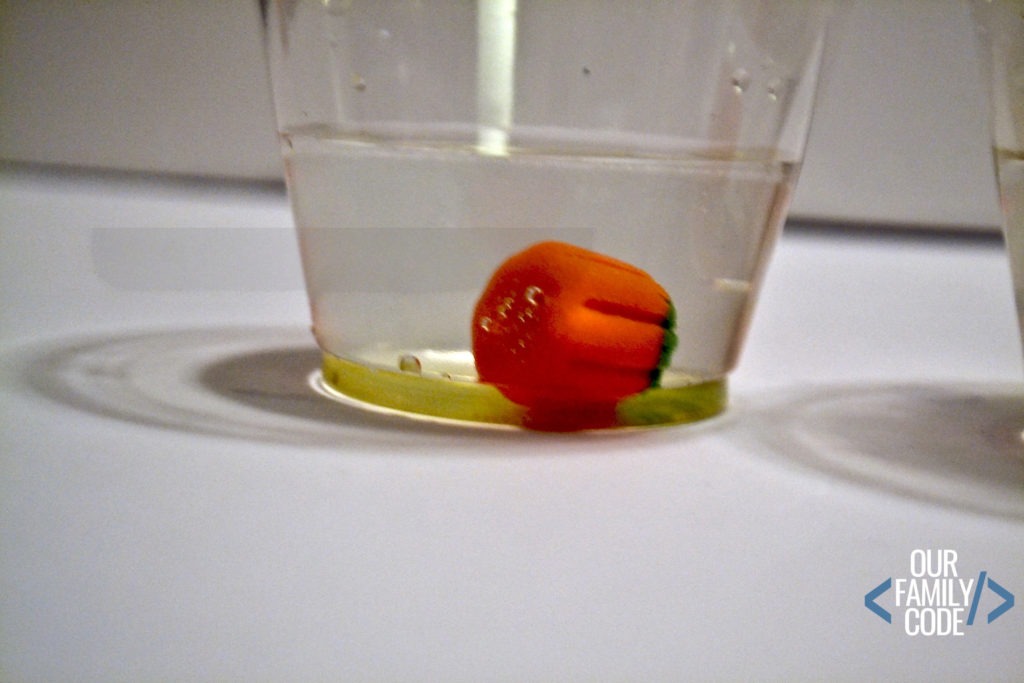
Ask:
- Did the candy dissolve completely?
- What color is the solution?
- Is the liquid cloudy or clear?
- Are there already any bubbles?
- Did the candy leave anything behind?
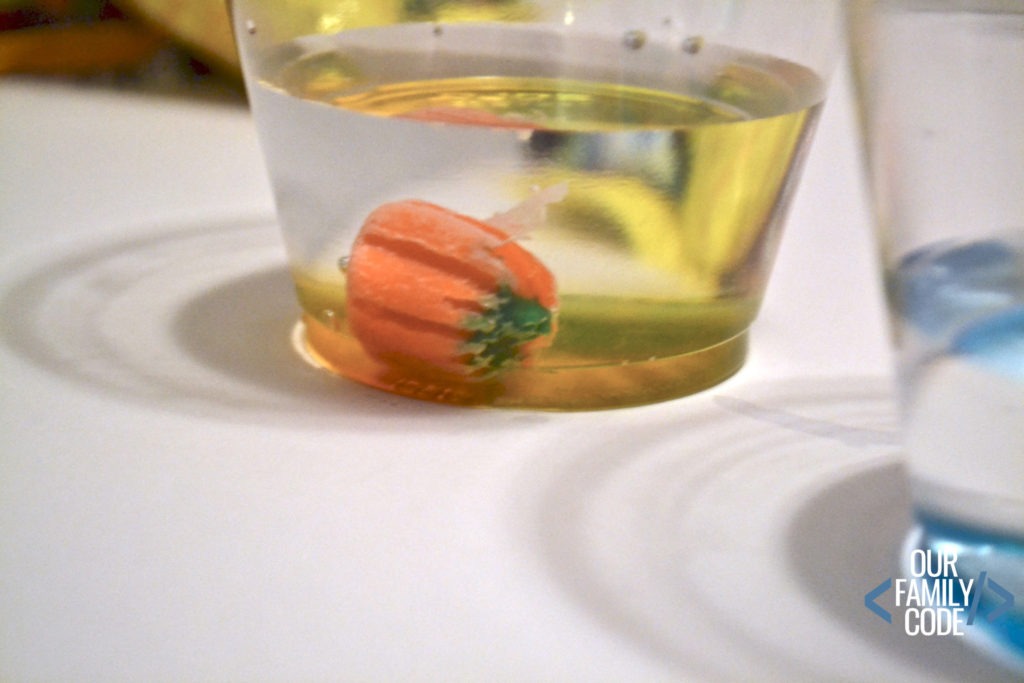
Record these observations. This gives kids a baseline before the chemical reaction begins.
6. Add the Baking Soda
Now for the fun part. Add the same measured amount of baking soda to each cup.
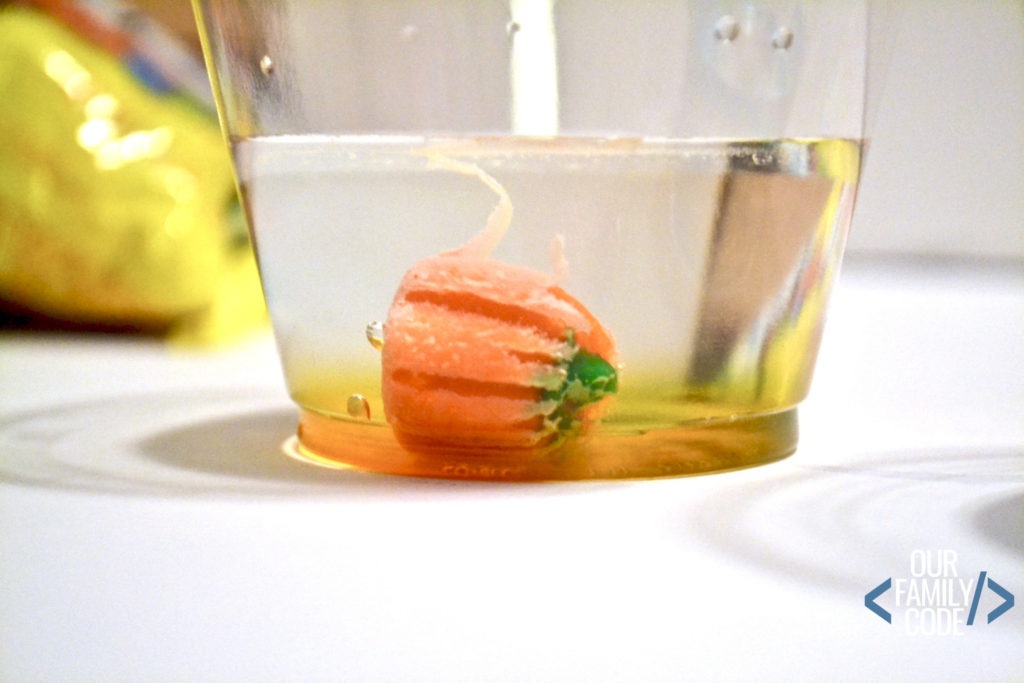
You might use: ½ teaspoon baking soda per sample
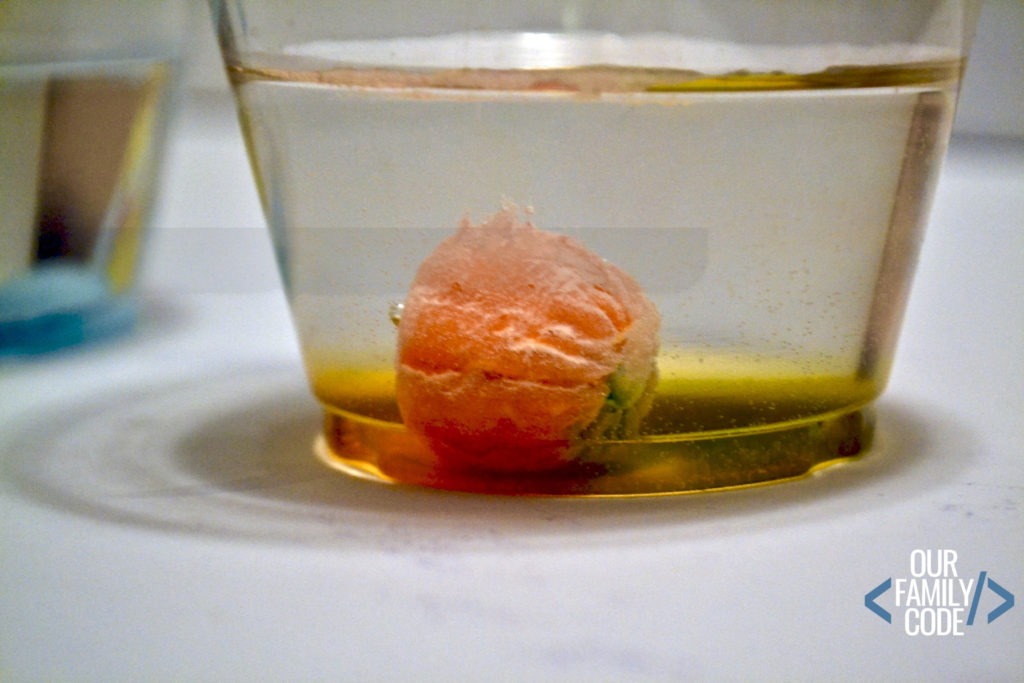
Add the same amount to the control cup as well. Watch carefully.
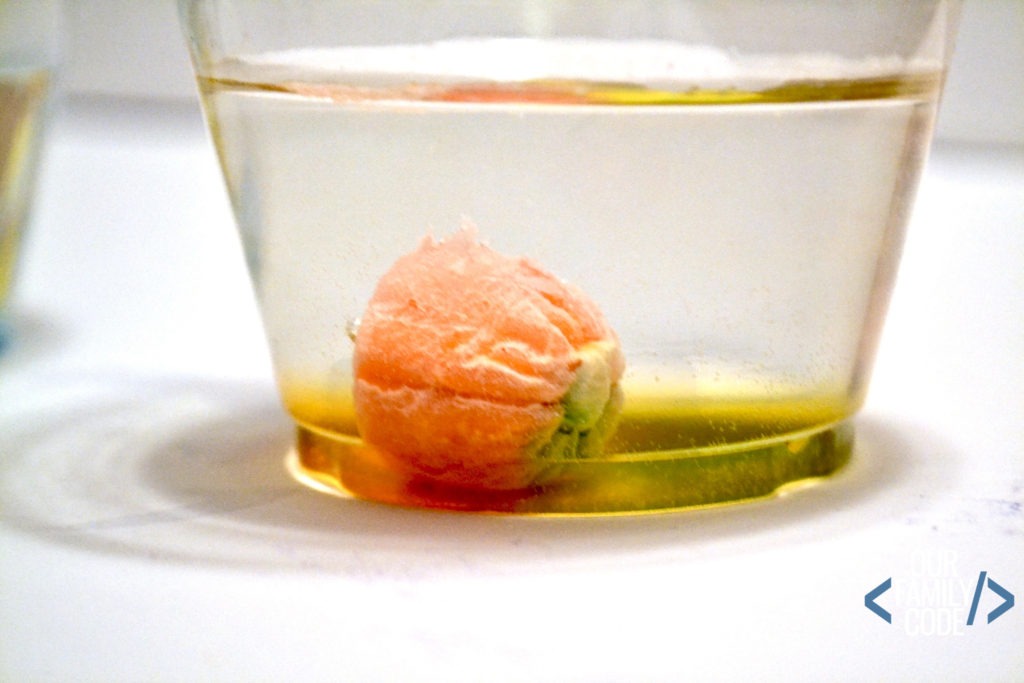
Some candy solutions may begin fizzing immediately. Others might produce only a few bubbles. Some may appear to do almost nothing.
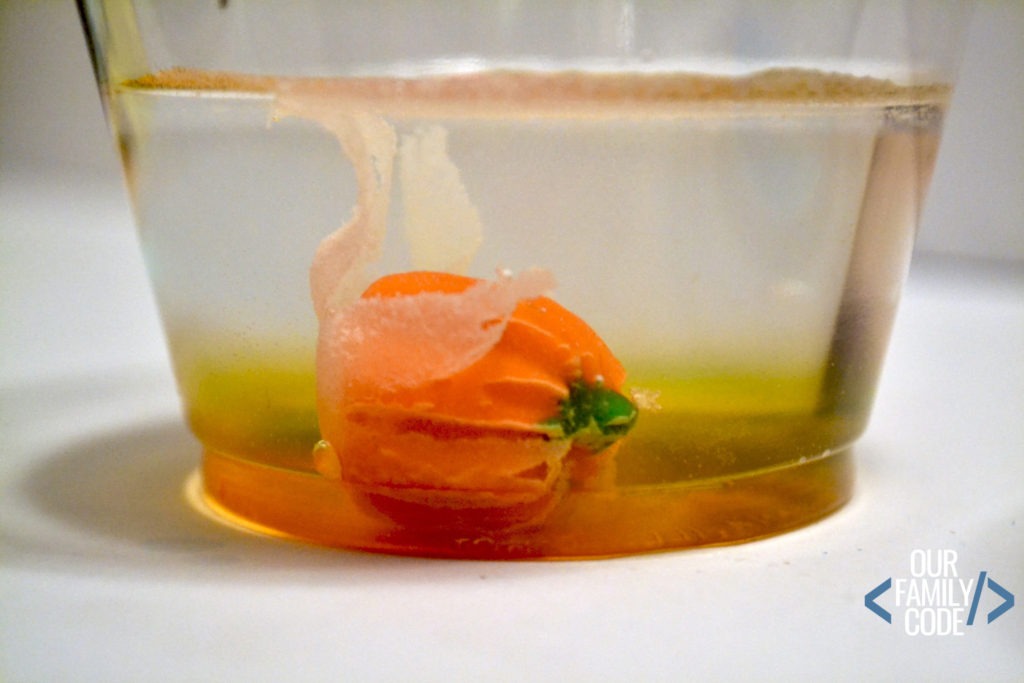
7. Compare the Reactions
Observe each cup for the same amount of time. Instead of trying to assign an exact pH value, classify the visible reactions.
For example:
- No visible fizz
- Mild fizz
- Moderate fizz
- Strong fizz
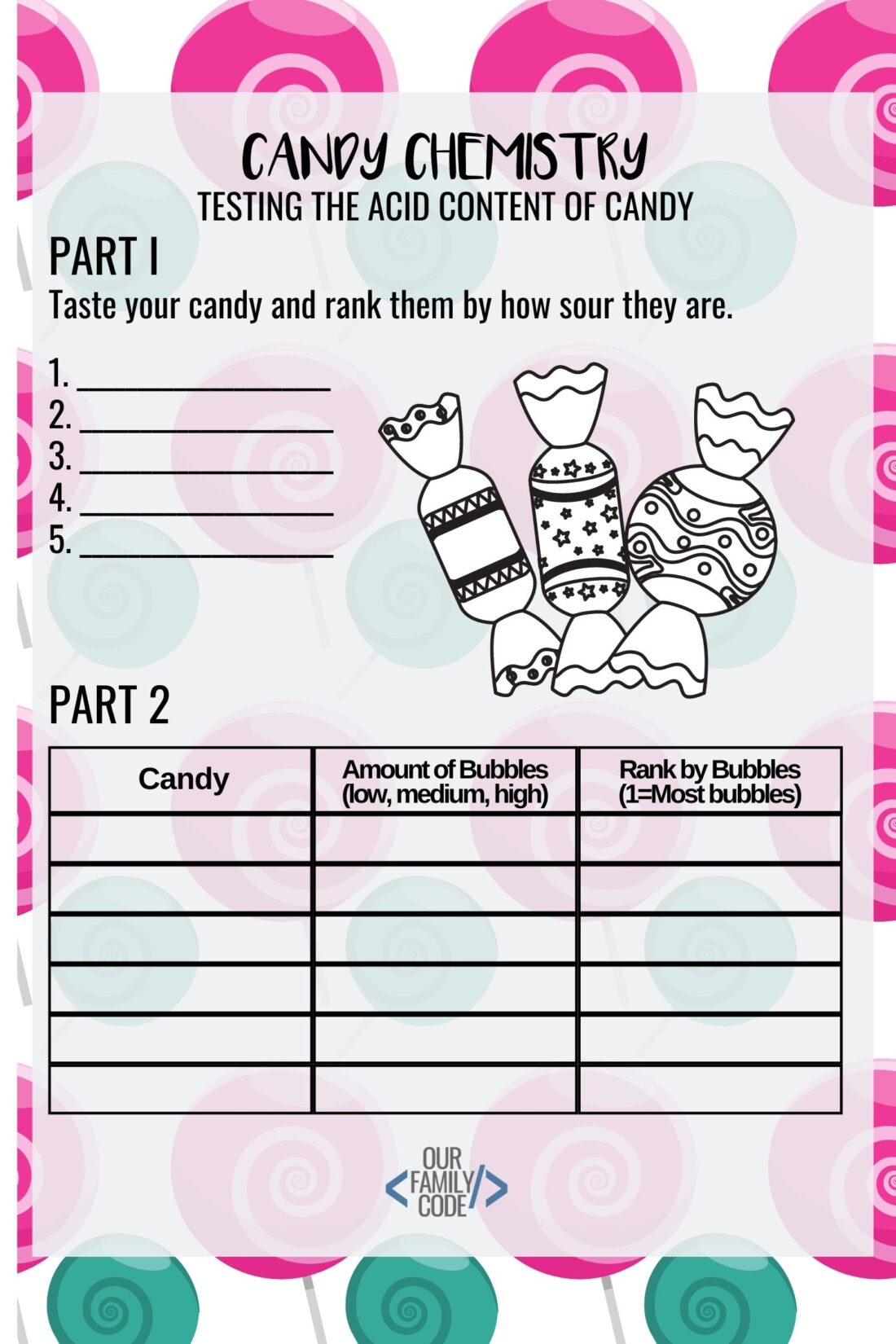
Kids can also rank their candies from the weakest to strongest observable reaction.
Ask:
- Which candy reacted the most?
- Which reacted the least?
- Did the control react?
- Were the results what you predicted?
Check the Candy Ingredient List
Now turn the candy package around.
This is one of my favorite parts of the experiment because kids can connect what they observed with the actual ingredients in the candy.
Look for acids such as:
- Citric acid
- Malic acid
- Tartaric acid
- Fumaric acid
- Ascorbic acid
- Lactic acid
Do the candies that produced stronger reactions list one or more acids?
Did any candy surprise you?
Are acids listed near the beginning or end of the ingredient list?
Remember that the ingredient list alone doesn’t tell us the exact pH or concentration of acid, but it can help explain some of our observations.
Can You Determine Candy pH with Baking Soda?
Not precisely. A strong baking-soda reaction can tell us that an acidic ingredient is likely present, but the number of bubbles is not a pH scale.
Two candies could have similar pH values and still react differently because they contain different acids or different concentrations of those acids.
The amount of candy that dissolves also matters. If you want to investigate pH more directly, repeat the experiment using pH paper or universal indicator strips.
Then compare the measured pH with the strength of the baking-soda reaction.
Do candies with lower measured pH always produce more fizz?
That makes a great follow-up investigation.
Turn It Into a Candy Science Fair Experiment
Want to take the activity further? Instead of testing a handful of candy once, design a more controlled experiment.
Choose one question to investigate, such as:
Does sour candy produce more carbon dioxide than non-sour candy?
Then keep the sample sizes and testing conditions as consistent as possible.
Older kids could measure:
- Candy mass
- Solution volume
- Reaction time
- Foam height
- pH before the reaction
- Ingredients listed on each candy package
They can graph their results and look for patterns.
You could even repeat each test several times and calculate an average.
That turns a quick Halloween STEM activity into a much stronger experimental-design challenge.
Candy Chemistry Experiment Questions for Kids
Use these questions before, during, or after the experiment:
- Which candy do you predict will react the most?
- What evidence supports your prediction?
- What variables should we keep the same?
- What do the bubbles tell us?
- Which candies contain acids in their ingredient lists?
- Did sour taste accurately predict the strongest reaction?
- Why might two sour candies react differently?
- What could we change to make the experiment more accurate?
- What would happen if we changed the amount of baking soda?
- How could we measure acidity more directly?
Encourage kids to explain why they think something happened rather than simply describing what they saw.
That’s where a simple candy experiment turns into real scientific thinking.
Try More Halloween Science Experiments
If you still have Halloween candy, pumpkins, or a few creepy ideas left, keep experimenting.
Try an erupting pumpkin chemistry experiment, investigate preservation with Apple Mummies, explore the science of Sticky Spider Webs, or use static electricity to Raise a Zombie.
You can find all of these projects and more in our collection of 31+ Halloween STEM activities for kids.
You Might Also Like
Mini Erupting Pumpkins
Turn small pumpkins into bubbling Halloween chemistry experiments using a classic acid-base reaction.
Apple Mummies Science Experiment
Explore preservation, decomposition, and Ancient Egyptian mummification with apple slices.
Sticky Spider Web Science
Investigate spider silk, sticky webs, proteins, and the incredible materials spiders create.
Halloween is one of our favorite excuses to make science messy, weird, and memorable.
And if there’s leftover candy involved, even better.

Looking for More Easy STEM Activities?
If your kids love hands-on experiments but you don’t want every activity to require a long supply list or hours of prep, check out our 31 Days of Low-Prep STEAM Activities for Kids.
It’s packed with simple science, technology, engineering, art, and math ideas that use everyday materials and are easy to work into homeschool lessons, classroom activities, or an afternoon at home.
Meet Toni, the Maker Mom behind Our Family Code

Hey there, I’m Toni! I’m a software engineer and Maker Mom that finds my joy in unleashing my children’s curiosity by exploring STEAM concepts with my fantastic five!
When I’m not chasing toddlers or raising tweens, you can find me tearing things up and putting them back together over here at Our Family Code.
I am the owner and content creator of multiple educational websites designed to increase access to STEAM & STEM education with a focus on teaching computer science and coding to kids of all ages!







What a yummy snack-speriment!
What a fun way to play with candy! I’m not sure I could sacrifice skittles to an experiment though!
My daughter felt the same way! It was just one though, so she was okay with it. Skittles are the only candy we really let her eat (or bribe her with!)
What a great experiment.